Best Pillow Thickness for Back Sleepers to Avoid Neck Pain
Your pillow’s thickness might be the real culprit behind your morning neck pain.
If you’re a back sleeper waking up stiff, you’re probably using a pillow that’s either too thick or too thin, and the difference between comfort and pain is just an inch or two.
The sweet spot typically ranges from 4 to 6 inches, but your shoulder width and mattress firmness affect what actually work for your body.

- REVOLUTIONIZE YOUR SLEEP WITH THE INNOVATIVE HOLLOW CONCAVE DESIGN - Tired of waking up...
- EXPERIENCE UNINTERRUPTED, BLISSFUL SLEEP WITH OUR VERSATILE PILLOW - Engineered with...

- BACK SLEEPER PILLOW: The Internets Best Pillow for comfortably sleeping on your back or...
- PATENT PENDING NECK SUPPORT: The pillows curved design wraps around into your neck and...

- 【STOP! THE NECK PAIN & SLEEPLESS NIGHTS ARE OVER!】After years of discomfort, you've...
- 【THE BEST INVESTMENT OF YOUR REST & HEALTH!】 Did you toss and turn all night? Did you...

Ideal Pillow Thickness for Back Sleepers: 4–6 Inches by Body Type
When you’re shopping pillow for a back sleeper, thickness matters more than you might think.
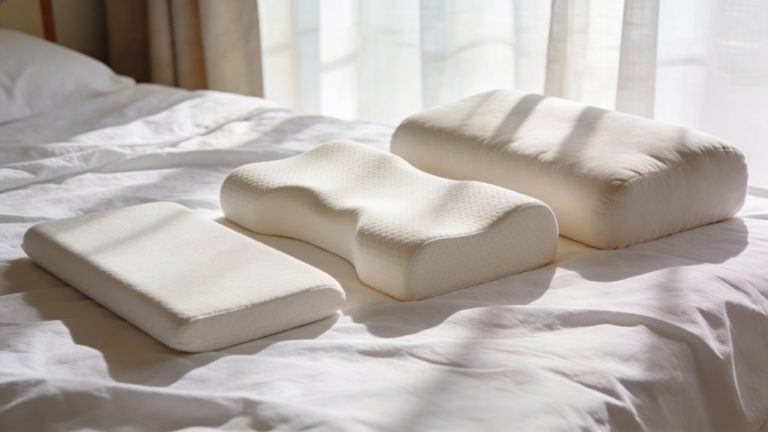
The sweet spot falls between 4 and 6 inches, depending on your build. This keeps your head and neck properly aligned with your spine.
If you’re average-sized, aim for 4 to 5 inches: it’ll cradle the natural curve of your neck without tilting your head forward. Heavier individuals typically need closer to 5 or 6 inches to support the extra weight.
Too thick pushes your head forward and strains your neck. Too thin leaves gaps that wreck body alignment.
Test Your Pillow Height in 60 Seconds
How do you know if your current pillow height actually works for your body?
- Lie on your back with your arms relaxed at your sides.
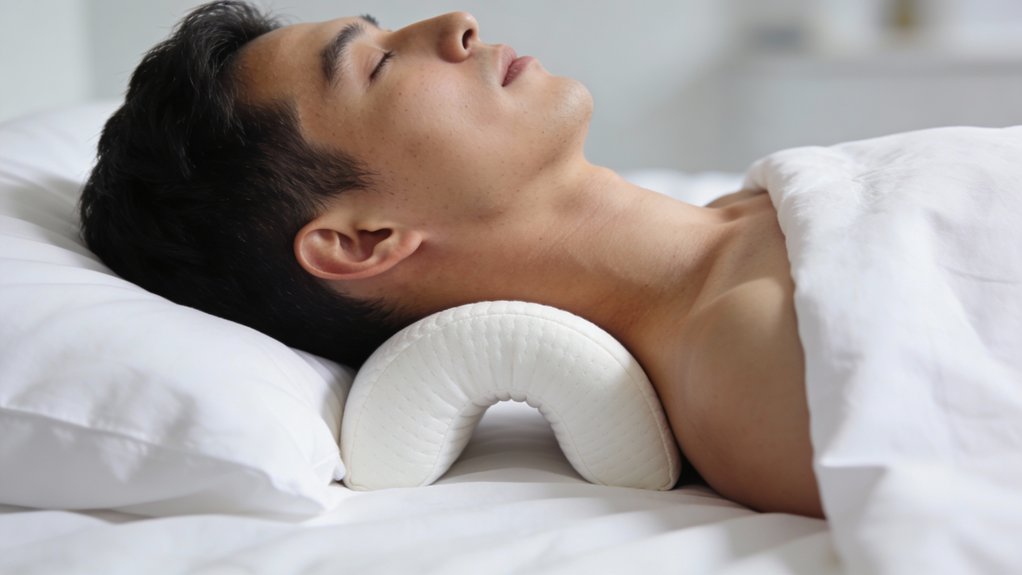
- Check if your ears align with your shoulders, that’s proper pillow alignment.
If they do, you’re set.
If your upper shoulders roll forward, your pillow’s too low and you’ll need something thicker. When your shoulders roll backward, that’s a sign your pillow’s too high and likely straining your neck.
Back sleepers typically need 3-5 inches of loft to maintain healthy sleep posture. Proper spinal alignment during sleep is essential for reducing back and neck pain, so make sure your pillow supports the natural curve of your cervical spine.
5 Signs Your Pillow Is Too Thick or Too Thin

Your body sends clear signals when your pillow height isn’t working:
- If you wake up with neck stiffness, shoulder discomfort, or feel your head pushed too far forward, your pillow’s too thick.
- A too-thin pillow creates different problems: you’ll notice your head feels unsupported, your chin tilts toward your chest, and you wake up with a sore neck.
Pay attention to these warning signs and adjust your pillow height accordingly for better sleep quality.
How Shoulder Width Changes Your Ideal Pillow Height
Because your shoulders create the foundation for pillow support, their width directly determines how much height you need beneath your head.
- If you’ve got broader shoulders, you’ll need a thicker pillow, typically 4 to 5 inches, to fill the gap between your head and mattress.
- Narrower shoulders require less height, around 3 to 4 inches.
Taking a shoulder measurement helps you select the right loft. Without proper thickness matching your build, neck alignment suffers.
Your head tilts awkwardly backward with too-thin pillows or gets pushed forward with overstuffed ones.
Medium loft pillows work well for most back sleepers with average-to-wide shoulders.
Adjust Pillow Thickness for Soft vs. Firm Mattresses

Mattress firmness changes how deeply your body sinks, which means you’ll need to adjust your pillow height accordingly.
How to match pillow material and mattress compatibility:
- Soft mattresses require pillows between 4-5 inches thick since your body sinks deeper, creating more distance between your head and the sleep surface.
- Firm mattresses work best with 3-4 inch pillows because the surface provides natural support without excessive sinking.
- Memory foam pillow material adapts to both mattress types by conforming to your head’s position.
- Testing alignment takes 2-3 nights: check if your ears align with your shoulders when lying down.
4 Ways to Fix Pillow Loft Without Buying New
Before spending money on a new pillow, you can modify your existing pillow’s height using simple household adjustments.
- Remove filling from shredded memory foam or polyester pillows to lower the loft.
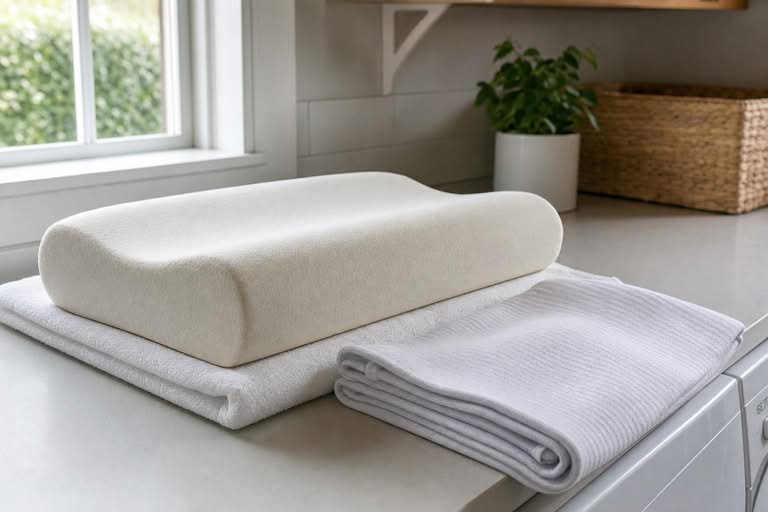
- Place a rolled towel underneath for extra support that aligns your spine properly.
- Pillow loft adjustments include folding flat pillows in half to create custom neck support.
- Temporary solutions like thicker pillowcases add slight height when needed.
- Fluff your pillow regularly since compression reduces its effectiveness over time.
These modifications help you test different heights before replacing your pillow, ensuring you find what works best for back sleeping.
Related: for the full picture on pillows and a sore neck, see the best pillow for neck pain.