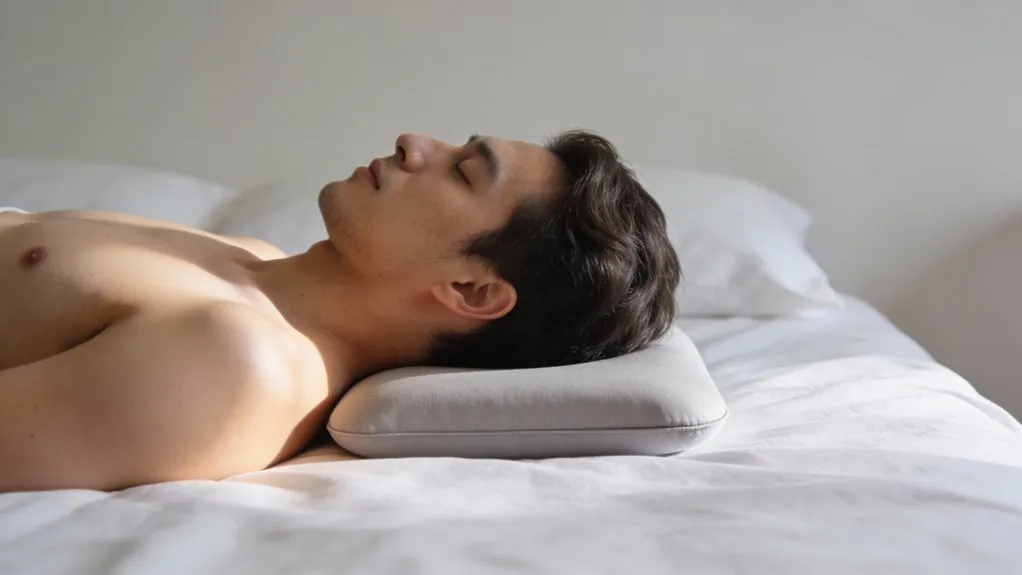
Best Pillow Thickness for Stomach Sleepers to Protect Your Neck
If you’re a stomach sleeper waking up with neck pain, your pillow’s probably too thick. Most people grab whatever pillow looks comfortable, but stomach sleeping demands something different, usually between 2 to 3 inches at most.
That thickness keeps your head from cranking sideways at an angle that strains muscles and joints all night.
The problem is, most standard pillows sit around 4 to 6 inches high, which means you’re basically asking your neck to do yoga for eight hours straight.
Why Stomach Sleepers Need a Thinner Pillow Than Everyone Else

When you sleep on your stomach, your head sits much closer to the mattress than it does for back or side sleepers.
Stomach sleepers need minimal pillow height because their heads naturally rest closer to the mattress surface than other sleep positions.
This sleep position creates a unique challenge for your neck and spine.
A thick pillow forces your head upward at an awkward angle, twisting your neck throughout the night.
That’s why you need just 2 to 3 inches of loft, significantly less than the 4 to 6 inches other sleepers require.
The right pillow materials at this low profile keep your neck neutral and aligned with your spine, preventing strain and chronic pain.
Long-term misalignment from an incorrect pillow height can lead to chronic pain and restricted movement that affects your daily activities.
The Ideal Pillow Thickness for Stomach Sleepers: 2–3 Inches
The sweet spot for stomach sleepers sits at 2 to 3 inches of pillow height: thin enough to keep your neck from bending backward, but substantial enough to provide cushioning for your head.
This range maintains neutral alignment from your skull down through your entire spine.
When you’re shopping for pillows, measure the loft to confirm it falls within these parameters. Different pillow materials compress differently under weight, so test yours by lying down.
Proper sleep posture requires your head to rest nearly level with your mattress, preventing the forward crane that triggers morning stiffness and discomfort. Unlike back sleepers who benefit from thicker pillows for neck support, stomach sleepers need thin pillows to avoid excessive neck rotation and strain.
Why Heavier Sleepers and Soft Mattresses Need Even Thinner Pillows

Your body weight changes everything about pillow selection for stomach sleeping. If you’re heavier, you’ll sink deeper into your mattress, which naturally elevates your head more than lighter sleepers experience.
This means you need an even thinner pillow, ideally under 2 inches, to maintain proper body alignment.
Soft mattresses compound this issue since they allow greater compression. The wrong pillow materials at standard heights will twist your neck and strain your spine throughout the night.
Ultra-low loft options become essential for preventing pain and breathing problems. Thinner pillows keep your head level with your spine, reducing discomfort considerably.
3 Warning Signs Your Pillow Is Still Too Thick
Even with careful pillow selection, stomach sleepers often miss the subtle signals that their pillow remains too thick for proper spinal alignment.
Your pillow material might feel comfortable, yet neck stiffness upon waking reveals excessive elevation.
If you’re breathing harder at night or snoring more, your airway is likely compressed.
Constant tossing and turning means your sleep position isn’t properly supported.
Check your neck angle: if your chin tucks toward your chest, that’s a clear warning.
Morning headaches shouldn’t be normal; they indicate strain from your head being pushed forward.
These signs demand immediate pillow adjustment.
The Simple Alignment Test: Is Your Neck Actually Straight?
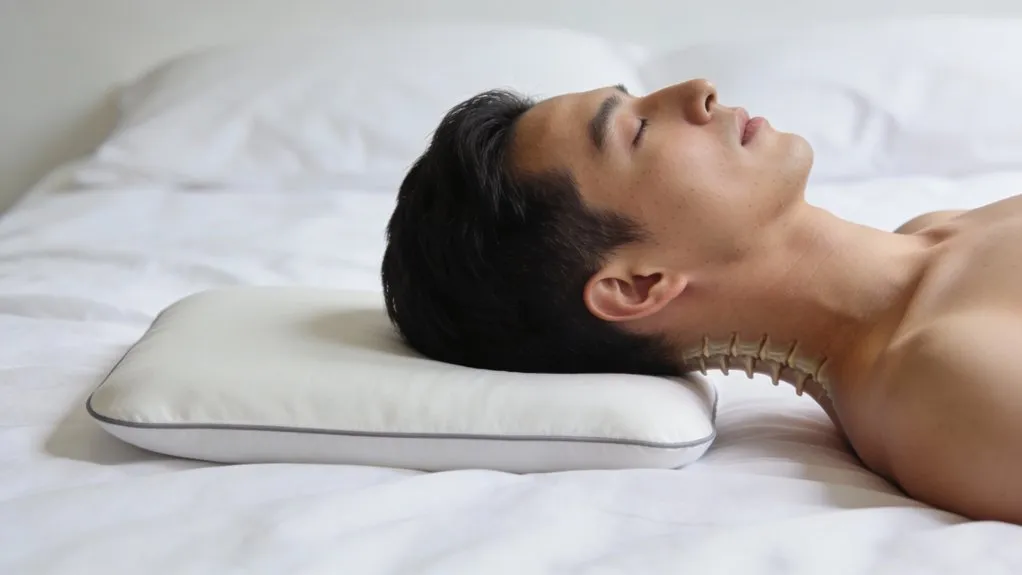
Recognizing warning signs matters little if you can’t verify what proper alignment actually looks like.
Here’s your alignment check: lie flat on your back with your current pillow, then place a ruler along your spine.
The straightedge should extend smoothly from your neck to your lower back without gaps or curves.
- Your neck shouldn’t angle considerably upward or downward
- Any deviation indicates inadequate pillow support
- Stomach sleepers need pillows under 3 inches thick
- Regular testing prevents chronic neck pain
This simple test reveals whether your pillow maintains neutral spinal alignment: the foundation of pain-free sleep.
Down vs. Shredded Latex: Which Compresses Flattest for Stomach Sleepers
Down vs. Shredded Latex: Which Compresses Flattest for Stomach Sleepers
When stomach sleepers compare pillow materials, down and shredded latex represent opposite approaches to achieving the same critical goal: maximum compression.
Down pillow benefits include natural softness and complete collapsibility; you’ll get minimal resistance when pressing your head down. However, down loses shape over time and requires regular fluffing.
Down’s instant collapse creates that barely-there feel stomach sleepers crave, though the material needs frequent maintenance to prevent flattening.
Shredded latex advantages center on adjustability and longevity. You can remove fill to reach your ideal three-inch loft, and the material bounces back night after night.
Down compresses flattest initially, but shredded latex maintains consistent low height for years without degrading or clumping together.
How Adjustable-Fill Pillows Let You Fine-Tune Loft to Your Body

Both down and shredded latex offer compression, but adjustable-fill pillows hand you direct control over your exact loft measurement.
You’ll customize the height by adding or removing fill until you hit that ideal sub-3-inch profile.
Pillow customization options give you practical adjustable loft benefits:
- Remove shredded memory foam or down alternative material through zippered openings
- Test your neck alignment after each adjustment session
- Adapt loft when switching between stomach and side sleeping
- Use removable inserts for quick modifications
You’ll prevent neck strain by dialing in your precise comfort level.
This personalization reduces morning stiffness and keeps your spine properly aligned throughout the night.
Should You Sleep Without a Pillow at All?
Why use a pillow when your mattress already offers a flat surface? Skipping a pillow can help you maintain proper spinal alignment and reduce neck strain.
However, most experts suggest using a thin pillow under 3 inches instead of going completely bare. Without any support, you might wake up with neck stiffness or back discomfort, especially if you already deal with pain.
Pillow alternatives like folded towels provide just enough cushioning without excessive elevation.
Your personal preference matters most: some stomach sleepers thrive without pillows, while others need minimal support to stay comfortable throughout the night.
Should Stomach Sleepers Use a Thin Pillow Under Their Hips Too?
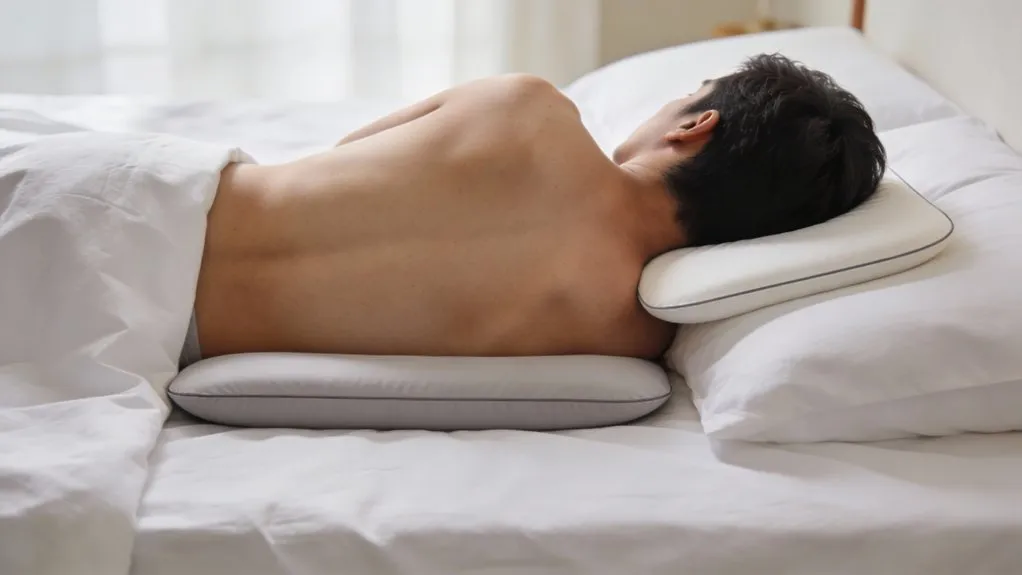
Your head isn’t the only part of your body that needs support when you sleep on your stomach. A thin pillow under your hips delivers significant hip pillow benefits by preventing your lower back from sagging into the mattress.
This simple addition promotes proper spinal alignment throughout the night.
Here’s what a hip pillow accomplishes:
- Creates a neutral spine position instead of an excessive arch
- Reduces pressure on your lower back during sleep
- Prevents long-term discomfort and potential spinal issues
- Works alongside your low-profile head pillow for complete support
Choose a pillow no thicker than 3 inches for ideal results.
What to Do When You Wake up With Neck Pain
When neck pain greets you first thing in the morning, your pillow is usually the culprit. Check if yours exceeds 3 inches, that’s too tall for stomach sleeping.
Try different pillow materials like down or shredded memory foam for better support. Start your day with morning stretches targeting your neck to release tension and improve flexibility.
Place a thin pillow under your pelvis while sleeping to align your spine properly.
If discomfort continues beyond a week or two, see a healthcare professional. Persistent pain might signal an underlying issue that needs proper treatment.