
What Is Pillow Loft and How to Choose the Right Height
Pillow loft is simply how high your pillow is when you lie on it, and that height has a big impact on whether you wake up with a comfortable neck or a sore one.
If the pillow is too high or too low for your body and sleep position, it pulls your neck out of alignment, so the key is matching loft to how you sleep, not just picking whatever soft pillow feels nice in the store.
What Is Pillow Loft and Why Does It Matter?

Pillow loft refers to the pillow’s height after it compresses under your head to its natural sleeping thickness, not how tall it looks when fluffed on the bed.
Many brands list only this “resting” height, so treat it as a rough guide rather than an exact indicator of how the pillow will feel in use.
Standard loft categories
Pillow loft is usually categorized into three height bands, based on the pillow’s thickness in inches when lying flat:
- Low loft: 3 inches (≈7.5 cm) or less; typically marketed for stomach sleepers or very small-framed people.
- Medium loft: About 3–5 inches (≈7.5–13 cm); commonly recommended for most back sleepers and many combination sleepers.
- High loft: 5 inches (≈13 cm) or more; usually aimed at side sleepers or people with broader shoulders who need extra height to fill the space between head and mattress.
This measurement matters because it directly affects your spinal alignment while you sleep.
When your spine isn’t properly aligned, you’ll likely wake up with neck pain or back discomfort.
The right loft depends on your sleep position and body type.
Your perfect pillow height isn’t one-size-fits-all. It should match how you sleep and your unique body frame.
A high pillow can strain neck muscles and potentially cause tension headaches, while a low pillow creates an unnatural neck bend that misaligns your spine from shoulders to hips.
Different pillow materials and sleep accessories can help you achieve the ideal height for quality rest and proper support.
What’s the Difference Between Loft and Firmness?
While many shoppers confuse these two terms, loft and firmness describe completely different pillow characteristics.
Loft measures your pillow’s height: up to 3 inches is low, 3-5 inches is medium, and over 5 inches is high. Firmness indicates resistance when you press down.
You’ll find various pillow types combining these traits: a high-loft pillow can feel soft or firm, while a low-loft option varies too.
Understanding both factors helps you select what works for your sleep position.
The right pairing supports proper spinal alignment and improves sleep quality, reducing neck pain and discomfort throughout the night. Wrong pillow thickness can also lead to morning headaches, shoulder pain, and arm numbness that disrupts your sleep.
Low, Medium, and High Loft Explained
When shopping for a new pillow, you’ll encounter three main loft categories that directly impact your comfort and spinal health.
- Low loft measure under 3 inches thick and work best for stomach sleepers who need minimal elevation.
- Medium loft options range from 3-5 inches, providing back sleepers with proper neck support and promoting healthy spinal curves.
- High loft pillows exceed 5 inches in thickness, filling the gap between your head and mattress for side sleepers.
Understanding these pillow loft benefits makes selecting pillow types much simpler, ensuring you’ll wake up refreshed rather than sore.
What Pillow Loft Does Your Sleep Position Need?
Your sleep position determines which loft height will keep your spine properly aligned through the night.
- Back sleepers: Low to lower‑medium loft, roughly 2–4 inches (≈5–10 cm), to keep the neck neutral without pushing the head forward.
- Side sleepers: Lower end of medium loft, about 3–4 inches (≈7–10 cm), often with a softer fill that compresses more.
- Stomach sleepers: Very low loft, 2 inches (≈5 cm) or less, or sometimes no pillow, to avoid neck extension.
- Combination sleeper: Medium loft around 3–5 inches (≈7–13 cm), so it is not too flat for side sleeping and not too tall for back sleeping. Depending on your body size you go from lower end of medium to higher end of medium. Adjustable fill pillows (shredded foam, latex, down/alternative) help the loft “adapt” as you change positions, which many sleep guides specifically recommend for combination sleepers.
How Body Type Changes Your Ideal Loft

Body weight determines how much you’ll compress your pillow, which directly affects the support you actually get.
- Heavier individuals: higher loft pillows, typically 5 to 7 inches, because they’ll compress the fill more throughout the night.
- Lighter individuals: lower lofts since they won’t sink as deeply into their pillows.
Your shoulder width matters too, especially if you’re a side sleeper:
- Broader shoulders: need a larger gap between your head and mattress, requiring more height to maintain alignment.
- Smaller-bodied individuals: lower lofts usually works better because there is less distance between shoulder and neck to fill.
The right pillow loft can significantly reduce back and shoulder pain by ensuring your spine stays neutral throughout the night.
Why Mattress Firmness Affects Pillow Height
The mattress you’re sleeping on determines how far your body sinks down, which completely changes the distance between your head and the sleep surface.
Your mattress firmness determines body sink depth, directly affecting the pillow height needed to maintain neutral spine alignment while you sleep.
Mattress support directly impacts the pillow height you’ll need for proper spine alignment.
Here’s how different firmness levels affect your pillow choice:
- Soft mattresses (1-3 firmness): You’ll sink 2-4 inches deeper, requiring a low-loft pillow (3-4 inches) to prevent your head from tilting upward.
- Medium mattresses (4-6 firmness): Moderate sinking means medium-loft pillows (4-5 inches) work best for most sleepers.
- Firm mattresses (7-10 firmness): Minimal sinking requires higher-loft pillows (5-7 inches) to bridge the gap.
Why Memory Foam, Down, and Latex Compress Differently

When you press your head into different pillow materials, each one responds in its own distinct way:
- Memory foam pillows contours to your head and neck but compresses considerably under weight, reducing loft over time.
- Down feather pillows pack down easily, creating a plush feel with lower height as they compress.
- Latex pillows shows superior material resilience, maintaining its shape throughout the night with minimal compression.
Memory foam works well for back sleepers, while down suits side sleepers seeking softness.
3 Signs Your Pillow Loft Is Wrong for You
How do you know if your pillow’s height isn’t working for your body? Watch for these warning signs:
- Morning neck or shoulder pain indicates your pillow loft isn’t supporting proper spine alignment during sleep.
- Constant tossing and turning throughout the night suggests your pillow height prevents you from settling into a comfortable position.
- Breathing difficulties or snoring can occur when your pillow causes misalignment: back sleepers particularly need medium loft pillows measuring 3-5 inches.
Stiffness upon waking means it’s time to reconsider your pillow’s height.
How to Test Your Pillow Loft at Home
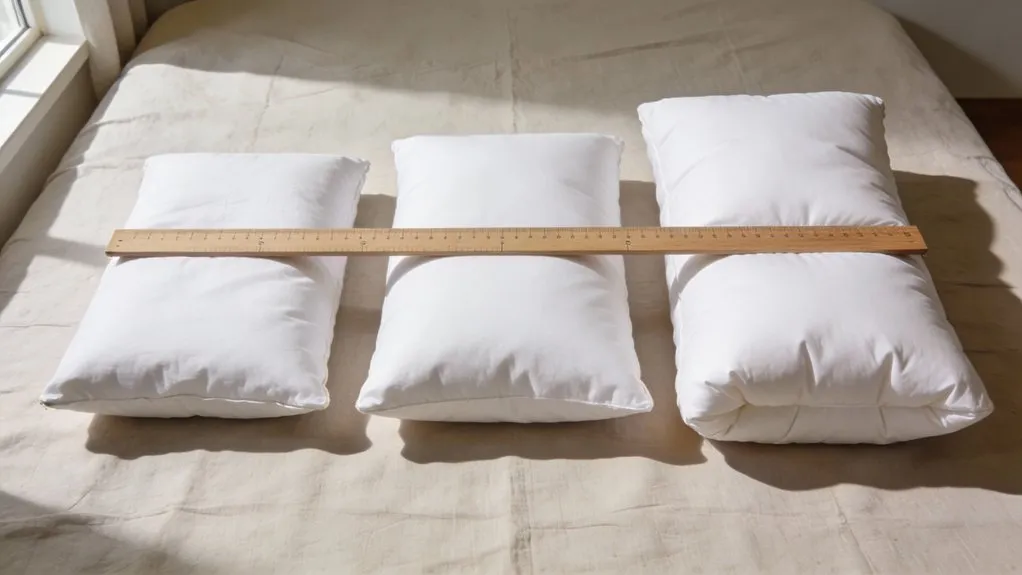
Pillow loft is “right” when it keeps your head and neck in a straight line with your spine in your main sleep positions. At home, you can test this visually and by feel with a few simple checks.
Check alignment in a mirror or photo:
- Lie on your usual mattress in your normal sleep position with your pillow and bedding.
- Have someone take a side‑view photo (or use a mirror) and look for a straight line from the middle of your ear through the middle of your shoulder; if your head tilts up, loft is too high, if it drops down, too low.
Scan for pressure or strain:
- Notice whether your neck feels compressed at the back (too high) or stretched on one side (too low), especially after 5–10 minutes of lying still.
- Check if your shoulder on the mattress feels jammed when on your side; this often means the loft is too low to properly fill the space between head and mattress.
Test all your main positions:
- If you change positions at night, repeat the check on your back and your side (and stomach, if you use it) to see whether one position feels clearly unsupported.
- For combination sleepers, aim for a loft that feels “good enough” in each position rather than perfect in only one; medium loft often works best here.
Fine‑tune with towels or removable fill
- To simulate higher loft, place a thin folded towel under the pillow and repeat the alignment check; if your neck feels better, you likely need a taller pillow.
- To simulate lower loft, remove some fill (if adjustable) or test with a thinner substitute pillow and compare comfort after 10–15 minutes.
The “morning test”
- Sleep on your adjusted setup for a few nights and monitor morning neck stiffness, headaches, or upper‑back tightness. Persistent symptoms suggest loft is still off.
- Once you wake without neck strain and feel less need to “punch” or fold the pillow into shape, your loft is likely in the right zone.
Common Pillow Loft Mistakes That Cause Neck Pain
Here are common misconceptions that lead to discomfort:
- Using one pillow for every position: Your neck needs different support when you’re sleeping on your back versus your side. Side sleepers require higher loft than back sleepers.
- Ignoring your mattress firmness: A soft mattress lets your shoulders sink deeper, reducing the gap your pillow needs to fill. Firmer surfaces need higher loft pillows.
- Overlooking body proportions: Wider shoulders and larger head sizes demand different pillow selection tips than smaller frames require.