Why Pillows Smell After Washing and How to Fix It
Freshly washed pillow can transform from pristine to putrid in mere hours. You’ve done everything right, or so you thought, but now you’re left with a damp, musty smell that’s worse than before you started.
The culprit isn’t your washing technique alone. Three specific factors work together to create this frustrating problem, and understanding them means you’ll never deal with a stinky pillow again.
Why Does Your Pillow Smell Worse After Washing?
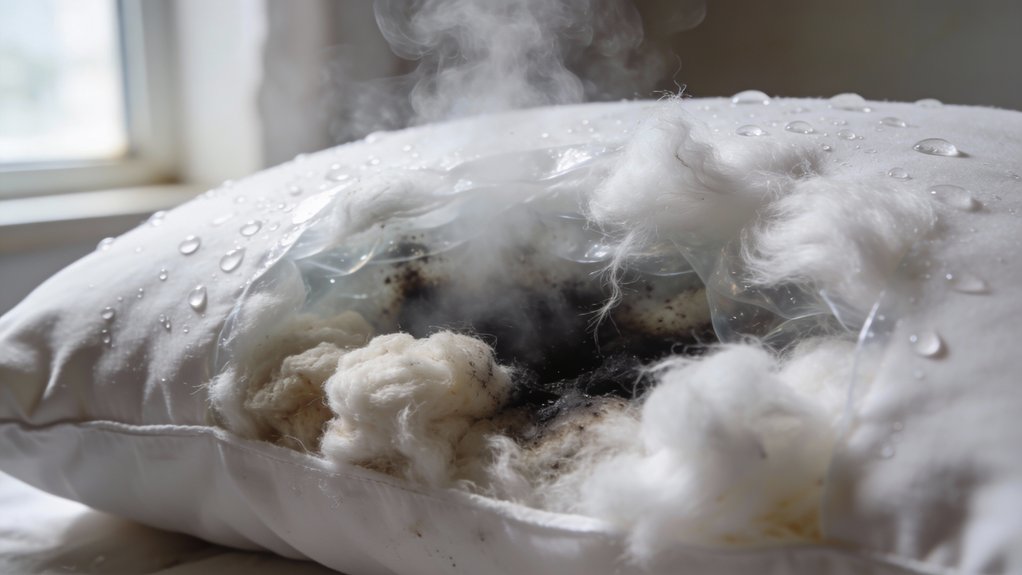
When you pull a freshly washed pillow from the dryer and catch a whiff of something musty or sour, you’re experiencing one of the most common laundry frustrations.
That musty smell from your freshly laundered pillow signals a frustrating reality: something went wrong in the washing or drying process.
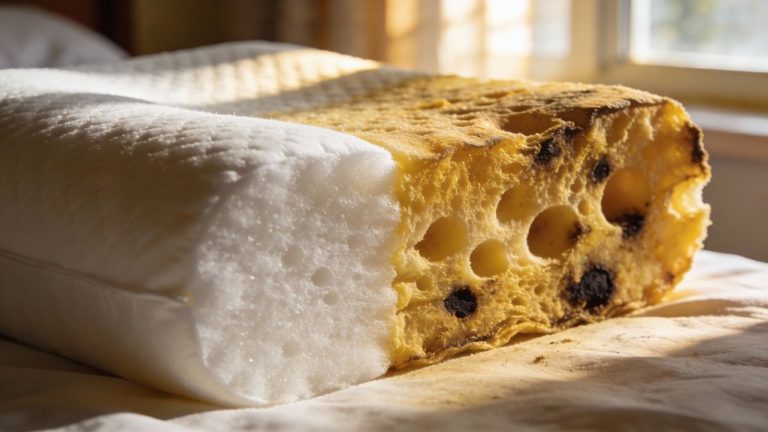
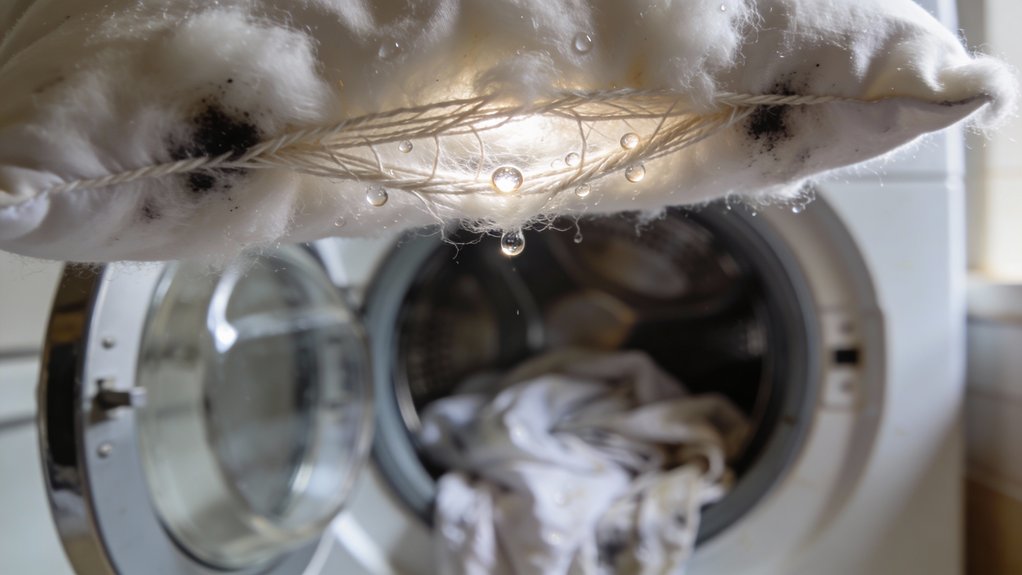
The culprit is usually trapped moisture that didn’t fully evaporate during drying. This dampness creates perfect conditions for mold and bacteria to thrive inside your pillow.
Down feathers release natural oils when wet, which intensify unpleasant smells. Leftover detergent residue can also react with these oils, making things worse.
Proper pillow care requires thorough drying, not just surface dryness.
These washing tips will help you avoid the stink next time.
Dry Pillows Completely to Stop Musty Smells
Incomplete drying creates the perfect environment for mold and bacteria that cause those awful musty odors.
- Your best drying techniques include using a low heat setting with clean tennis balls to fluff and circulate air throughout.
- Check your pillows every 30 minutes; they should feel completely dry, not just mostly dry.
- For effective moisture prevention, consider air drying them outdoors in direct sunlight.
If any dampness remains after your first attempt, run them through again until they’re genuinely bone-dry.
Damp pillows can cause colds and other health issues, so ensuring complete dryness is essential for both comfort and well-being.
Get Rid of Smell Fast With These Emergency Fixes
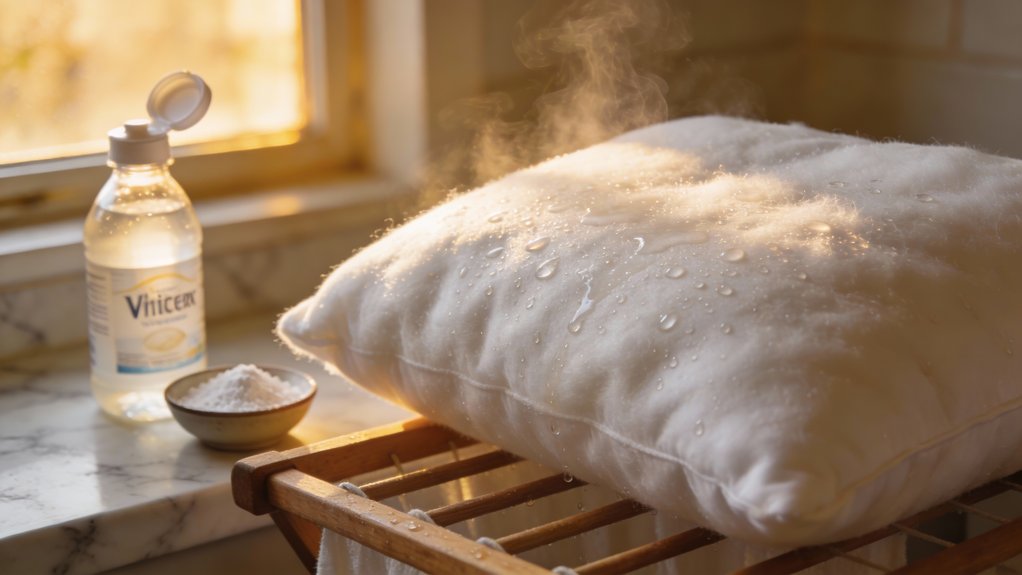
Sometimes you’ll need quick solutions because your pillows still smell even after proper washing and drying.
- Emergency deodorizing starts with baking soda, sprinkle it generously over the pillow, wait three hours, then vacuum thoroughly.
- For immediate results, spray a diluted vinegar solution lightly on the fabric and let it air dry completely.
- You can also toss pillows in the dryer on low heat with clean tennis balls for 20 minutes to disperse odors.
These quick odor solutions work fast, but for stubborn smells, place activated charcoal packs inside the pillowcase for 24-48 hours to absorb lingering moisture and scents.
Why Trapped Moisture Causes Pillow Odors
Moisture trapped deep inside your pillow creates the perfect breeding ground for mold and mildew, which explains that musty smell you notice after washing.
When your pillow doesn’t dry completely, moisture retention becomes a serious problem.
Here’s what happens inside a damp pillow:
- Bacteria multiply rapidly in wet filling material within 24-48 hours
- Down feathers clump together, trapping water pockets that won’t evaporate
- Mildew growth starts when pillows stay damp for more than two days
- Leftover detergent residue mixes with moisture, creating chemical odors
The solution? Guarantee pillows dry thoroughly before use. Air drying on a flat surface ensures complete moisture removal and prevents odor development.
How Detergent Buildup Makes Pillows Smell Bad
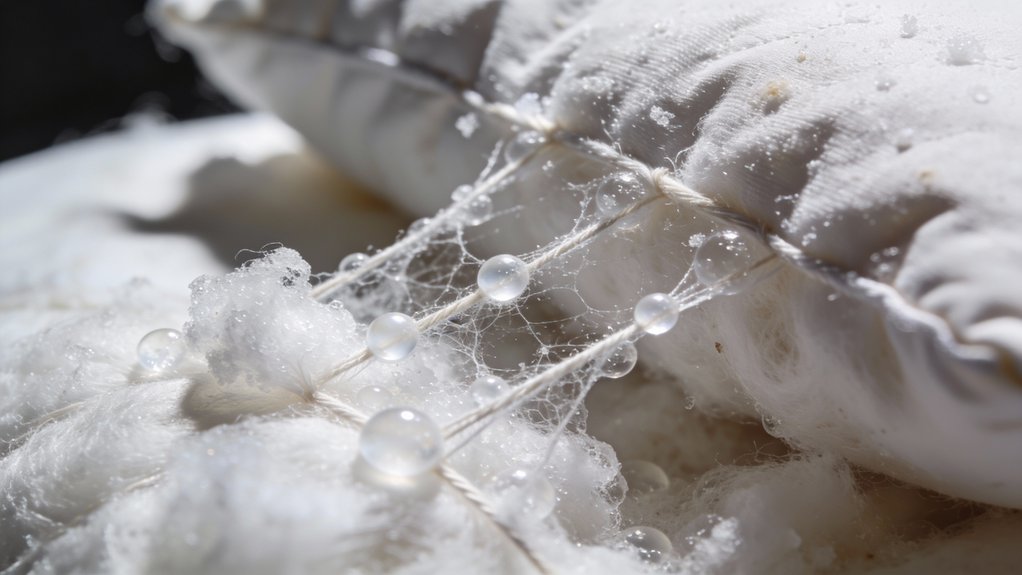
While moisture creates one problem, using too much detergent during washing creates another: a sticky residue that won’t rinse away completely.
When you overload your machine with soap, leftover detergent gets trapped in the pillow’s fibers. This residue then reacts with the natural oils in down feathers, creating detergent reactions that produce sour, musty smells.
For odor prevention, use only one-third of your normal detergent amount and choose a low-sudsing, mild formula.
Always run an extra rinse cycle to flush out any remaining soap before drying. Less detergent actually means fresher pillows.
Natural Feather Oils That Activate When Wet
Detergent residue isn’t the only chemical culprit behind that distinctive post-wash pillow smell. Your down and feather pillows contain natural feather oils that trigger odor activation when they get wet.
Here’s what happens:
- Moisture releases inherent oils from the feather structure, creating that musty scent you’ll notice immediately after washing.
- Oils react with leftover detergent, intensifying the smell if you haven’t rinsed thoroughly.
- Trapped moisture disrupts the oils’ natural wicking properties, holding odors inside the pillow.
- Extended drying times for down feathers mean these oils stay active longer than synthetic materials would.
- Musty odors from wet feathers can indicate poor drying conditions and potential health risks that compromise your sleeping environment.
Rewash Your Smelly Pillow the Right Way
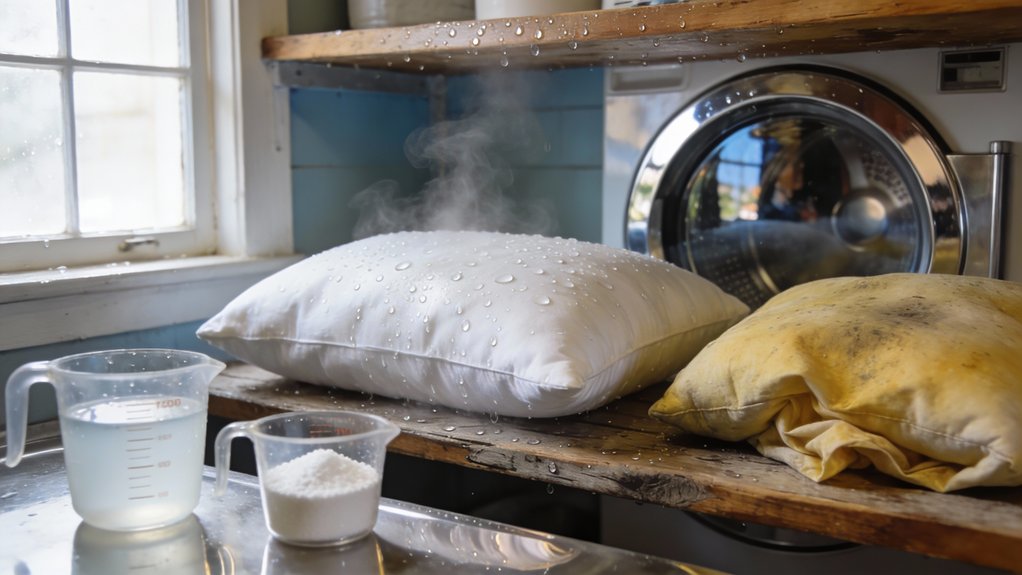
Once you’ve identified the source of that unpleasant smell, you’ll need to rewash your pillow with a different approach than your first attempt.
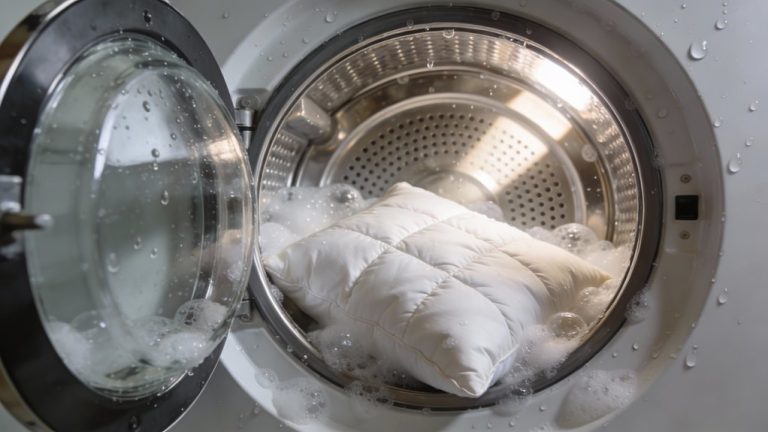
Proper pillow care starts with using a front-loading washer, which treats delicate materials more gently.
A front-loading washer provides the gentle agitation that delicate pillow materials need to stay intact during cleaning.
Set it to cold water and add a mild, low-sudsing detergent. Run an extra rinse cycle to eliminate all soap residue.
For drying, choose low heat and toss in clean tennis balls to prevent clumping. These washing techniques help feathers maintain their natural properties.
Finally, air out your pillow in direct sunlight to neutralize any remaining odors completely.
Use This Much Detergent (and This Type Only)
The amount of detergent for pillows you use matters just as much as the type you choose.
Too much soap creates residue that causes musty odors, while the wrong detergent types can damage feathers.
Here are essential washing tips:
- Use mild, low-sudsing detergent specifically designed for delicate materials to prevent buildup in your down pillow.
- Measure one-third of your regular dose: excessive detergent leaves residues that smell awful.
- Skip bleach and fabric softeners entirely: they damage feathers and strip natural oils.
- Run an extra rinse cycle to remove all soap traces and eliminate lingering smells.
Always check the manufacturer’s care label first.
Keep Pillows Fresh Between Washes
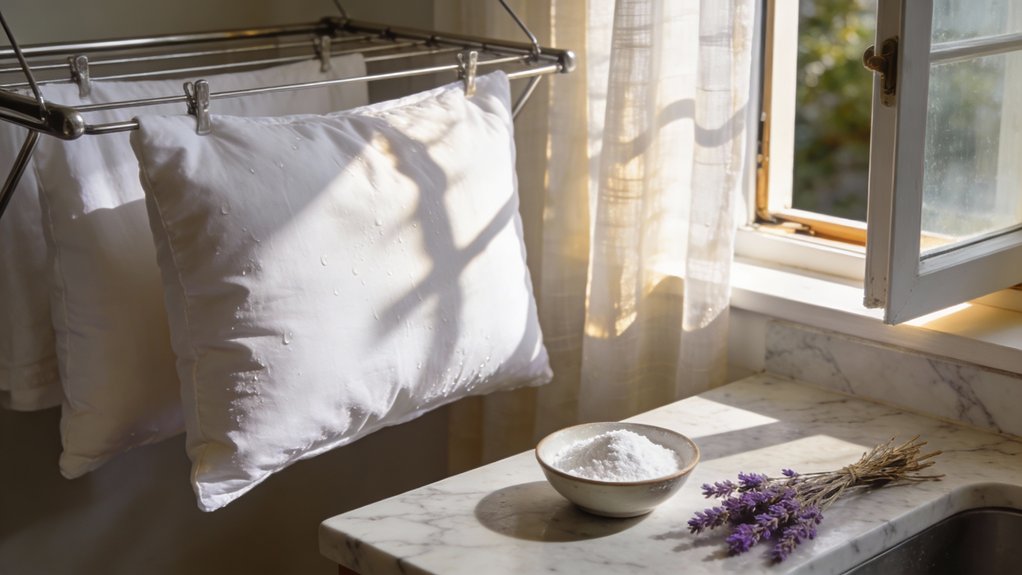
Proper washing keeps pillows clean, but what you do between wash days determines whether they’ll smell fresh or musty.
Daily maintenance matters more than occasional deep cleaning when it comes to keeping your pillows smelling fresh instead of funky.
These pillow maintenance tips make a real difference:
- Fluff your pillows daily to maintain airflow and prevent clumping.
- Wash pillowcases weekly to stop dirt and sweat from penetrating deeper.
- Air pillows outdoors in direct sunlight monthly: the sun naturally deodorizes.
- Use breathable pillowcases to reduce moisture retention from body oils and sweat.
- Store pillows in cool, dry places to avoid humidity that encourages mold growth.
These freshness techniques take minimal effort but dramatically extend how long your pillows smell clean.
When to Replace Your Pillow Instead of Rewashing
- Persistent yellow stains or odors that remain after multiple washes suggest deeper integrity problems.
- Loss of shape or lumpiness that affects your sleep quality and comfort.
- Failed fold test, if your pillow doesn’t spring back to its original shape after folding.
- Musty smells indicating mold, trapped allergens, or significant wear and tear that poses health risks.
When these signs appear, it is time to replace your pillow.