How to Wash Memory Foam Pillows (Without Ruining the Foam)
Solid memory foam cannot go in the washing machine. Not even on a gentle cycle.
The agitation tears the foam, and a soaked block of dense foam can take days to dry through the middle. Mildew forms long before it gets there.
The correct approach is simpler: spot-clean the foam, machine-wash the removable cover, and air-dry everything flat.
Here is how to do each step.
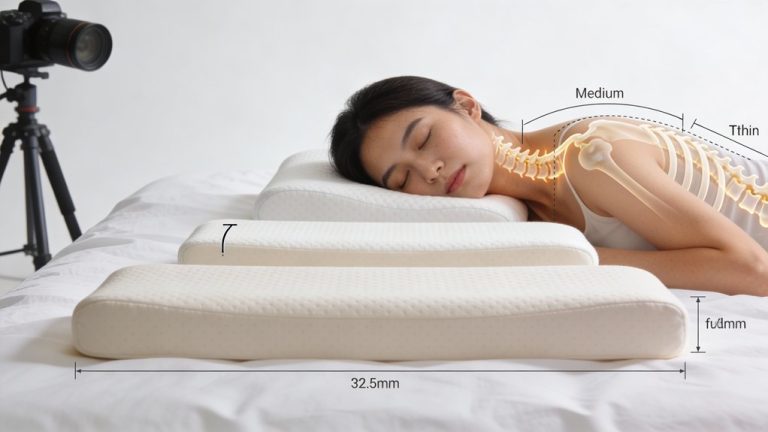
Solid foam vs shredded foam: the difference matters

Not all memory foam pillows work the same way.
Solid memory foam (a single contoured or flat block) is spot-clean only. No soaking, no hand-washing in a tub, no machine. Water saturates the interior and the foam never fully dries.
Shredded fill is a different story.
Shredded memory foam (loose fill inside a cover, similar to a down-alternative pillow) is more forgiving. Some shredded fills tolerate a gentle hand-wash if the care tag says so. The cover is always machine-washable.
Check your care tag before you do anything. If the tag is gone, treat the foam as spot-clean only. That is the safe floor.
Step 1: Remove and wash the cover
The removable cover is the easy part.
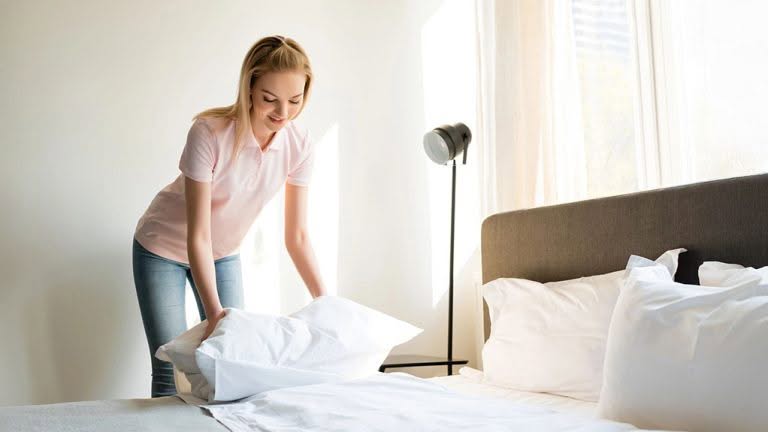
- Unzip and slide the cover off the foam.
- Zip it back up before washing so the zipper does not snag.
- Machine wash on a gentle, cold or warm cycle with a mild detergent.
- Skip fabric softener; it can leave a residue that attracts more dirt over time.
- Tumble dry low, or hang flat to air-dry.
A cover that gets washed regularly keeps the foam cleaner for longer. If you want to keep the pillow in rotation while the cover dries, a spare memory foam pillow cover is inexpensive and worth having.
Step 2: Spot-clean the foam

This is how you handle any stain or soil on the foam itself.
Mix a small amount of mild liquid detergent with warm water. Dampen a clean white cloth with the solution. Blot the stained area gently, working from the outside edge of the stain inward.
Then take a second cloth dampened with plain water and blot over the same spot to rinse out the soap.
The aim is surface moisture only. A lightly damp cloth does the job. A wet cloth risks soaking into the foam and staying there.
A few things to avoid:
- No soaking the foam in a tub or sink, even briefly.
- No putting the foam in a washing machine or dryer.
- No bleach or harsh chemical cleaners, which break down the foam structure.
- No twisting or wringing.
Step 3: Freshen with baking soda (no water needed)
Baking soda deodorizes without adding any moisture to the foam. Use it when the pillow just needs freshening.
Remove the cover and wash it as above. Sprinkle baking soda lightly over the exposed foam surface. Let it sit for an hour, then vacuum it off with an upholstery attachment.
This lifts odors, dust, and surface debris without any water involved.
Step 4: Air-dry completely
This step is where most damage happens.
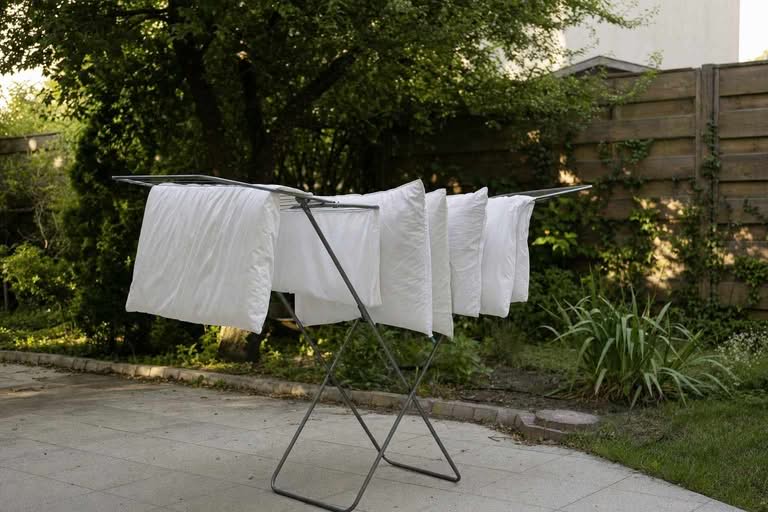
Set the foam flat on a clean towel in a well-ventilated room. Keep it away from direct sun; prolonged UV exposure degrades foam. Turn it every hour or two so all sides can breathe.
Two things to skip entirely:
- No clothes dryer. Heat damages foam and the tumbling can tear it.
- No direct sunlight for extended periods.
Dense foam holds moisture longer than it looks. Press your hand into the center before you put the cover back on. Cool or damp in the middle means it needs more time.
For a full look at drying any type of pillow safely, our guide on how to dry pillows covers the options.
What if you accidentally machine-washed the foam?
Do not put it in the dryer. If the foam survived intact (no tearing, no collapse), there is still a path forward.
Press out as much water as you can with a clean towel. Do not twist. Lay it flat in a well-ventilated area and give it a full day or more to dry through completely.
Check the center after 24 hours. Cool or damp in the middle means it needs more time. A mildew-damp pillow is worse than a replaced one.
How often should you clean it?
The cover needs washing; the foam rarely does. Wash the cover every two to three weeks with regular use. Spot-clean the foam only when you can see a stain or smell an odor.
Between washes, shake the pillow out and let it air near an open window. Airing it regularly keeps the foam fresh and cuts down on how often you need to spot-clean.
A pillow protector between the foam and the outer cover adds another barrier. Most are machine-washable and protect the foam from moisture, dust mites, and skin oils.
When to replace it
Most pillows are cleaned; memory foam is maintained. When spot-cleaning is not enough, or when the foam loses its shape and no longer supports your head and neck, that is the signal to replace it.
The care method here applies to foam-fill bedding generally. If you use a firm back-support lounger, see our guide on how to wash a husband pillow for the same spot-clean approach.
If you are considering an upgrade, the roundup of best body pillows covers foam-fill options alongside other fills.
The bottom line
Wash the cover in the machine. Spot-clean the foam. Air-dry both completely.
The one rule that saves the foam is this: keep the moisture on the surface. A lightly damp cloth does the job; soaking the foam causes a problem that no amount of drying can fully undo.