Morning Headaches? The Pillow Cause Most Guides Overlook
About 1 in 13 people wake up with headaches on a regular basis. That figure comes from a population study of nearly 19,000 adults by sleep researcher Maurice Ohayon.
Search “morning headaches” and you will get the same list every time: sleep apnea, dehydration, caffeine, teeth grinding, low blood sugar.
One cause barely gets a mention, even though it is the easiest to fix: your neck, and the pillow holding it in one position for eight hours straight.
Where morning headaches actually start

Plenty of morning headaches do come from the usual suspects.
Sleep apnea and grinding are real, and worth ruling out.
But a large share of headaches begin lower down, in the neck.
These are called cervicogenic headaches: pain referred from the joints, muscles, and nerves of the neck rather than the head itself.
The careful estimate is under 1 to about 4 percent of people who get headaches, lower than the bigger numbers often repeated online.
The tell is the pattern. The pain often:
- Starts at the base of the skull or the back of the head
- Sits on one side
- Comes with a stiff or tender neck
- Is worst on waking and eases as you move during the day
If that sounds like your morning, the cause may be a few inches below where it hurts.
Why your pillow is the prime suspect
Here is the part the headache lists skip.
A poor neck posture is a known trigger for cervicogenic pain.
During the day you shift constantly. At night, a pillow locks your neck into one angle for seven or eight hours, with no movement to relieve it.
Get that angle wrong and you spend the night gently straining the exact structures that refer pain to your head.
- A pillow that is too high cranks the neck up toward your chest.
- One that is too flat lets your head drop back.
- One that has gone soft and lumpy gives way through the night, so your neck sinks out of line.
The fix is the same one the Cleveland Clinic points to for a stiff neck. Keep your head and neck in line with your spine, the way they sit when you stand with good posture.
How to test whether it is your pillow

You do not need a sleep study to check this one. Run a short experiment.
- Look at the pattern. Headaches that are worst on waking and fade by midday point to something about how you slept, not your day.
- Check your neck. If it is stiff or tender in the morning, the neck is involved.
- Fix the pillow height for your position for two weeks. Side sleepers need a taller, firmer pillow; back sleepers a medium one; stomach sleepers almost none.
- See what changes. A clear drop in morning headaches is your answer.
Our guide to pillow loft and the right height shows how to measure it. The best pillow for neck pain covers the support that keeps the neck neutral.
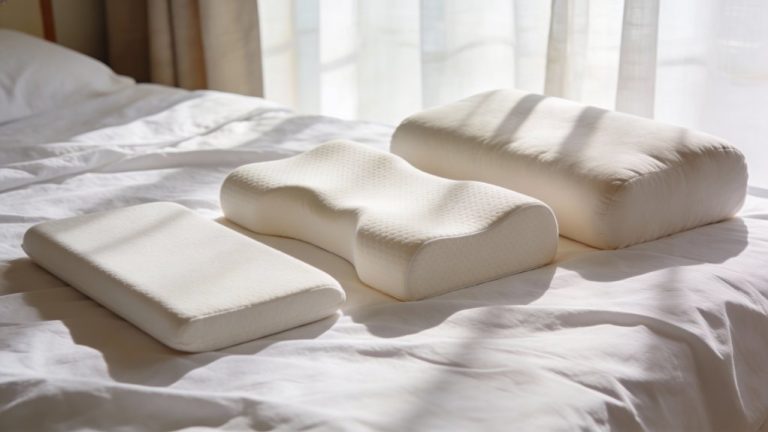
A cervical contour pillow is worth a look if you sleep on your back. The raised edge holds the neck’s curve for you.
What to do about it
Start with the cheapest, most controllable cause. Before you blame caffeine or dehydration, fix the one thing that holds your neck still all night.
Match your pillow’s height to how you sleep, and replace it if it has gone flat. Give the change two weeks to show up in your mornings.
If the headaches are severe, come with numbness or vision changes, or do not budge after a real pillow fix, see a doctor. A pillow solves a pillow problem, not a medical one.