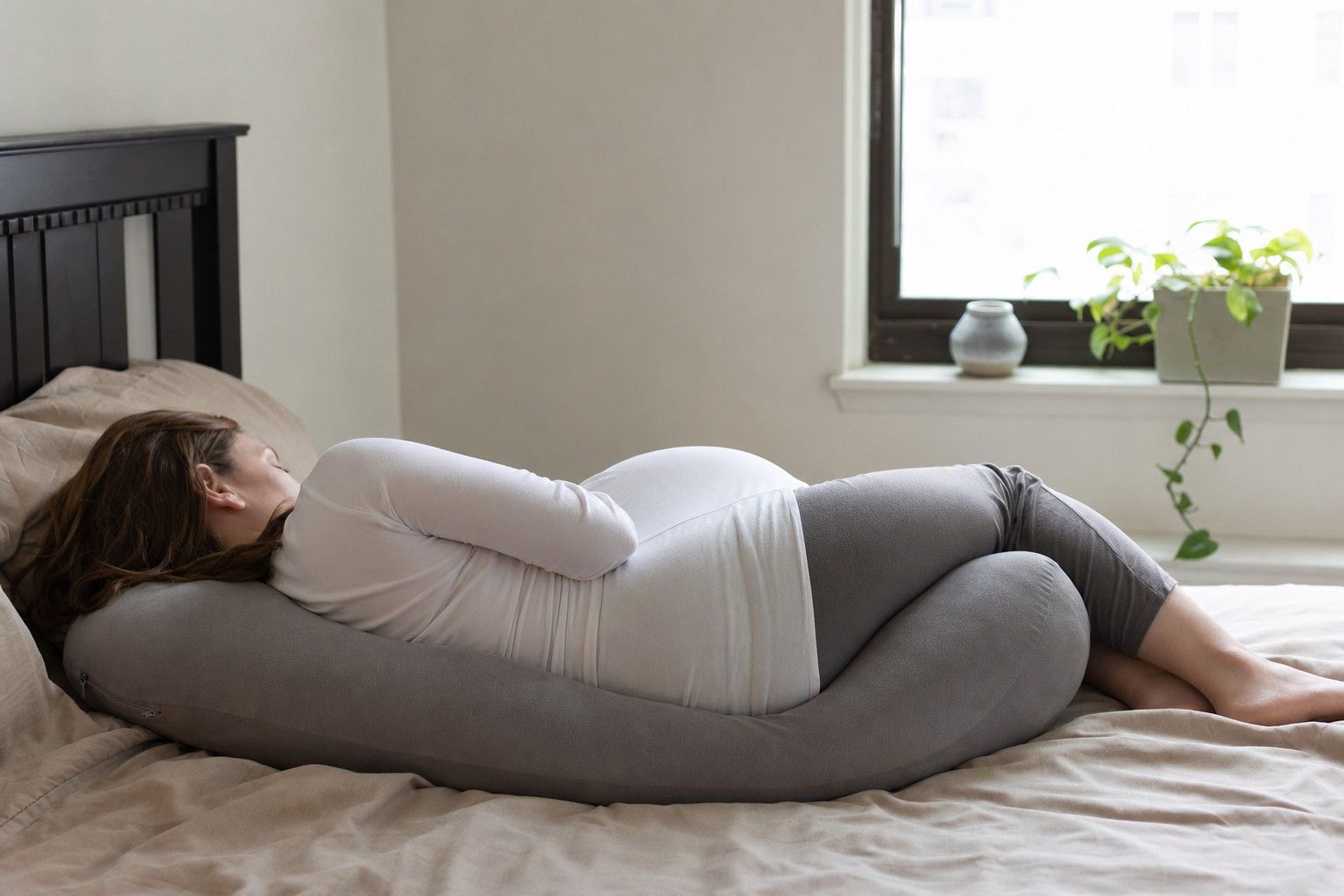
Best Pregnancy Pillows for Side Sleeping and Support
A pregnancy pillow’s real job is not to be soft. It is to support your belly, your back, and the space between your knees, all at once, so side sleeping actually feels possible.
The right shape for your body matters more than the price tag or the brand name. A pillow that wraps you fully works differently than one that just props up your belly, and the two are not interchangeable.
Here is how the shapes differ and how to pick.

- Ergonomic Supportive Pillow - Momcozy full body pillow designs to replace the needs of...
- Deeply Sleep With Momcozy Maternity Pillow - Our pregnancy body pillow enhances blood...

- ONE PILLOW FOR COMPLETE BODY SUPPORT: The 57-inch ALLOPERA pregnancy pillow replaces...
- BETTER ALIGNMENT, LESS PRESSURE: Supports the back, hips, knees, and legs to encourage a...

- ✅Ergonomic Design for Adults - Moon Park full body pillow is designed with ergonomics in...
- ✅Achieve Deep Sleep with the Moon Park Maternity Pillow - The Moon Park pregnancy body...
The main pregnancy pillow shapes, and who each suits
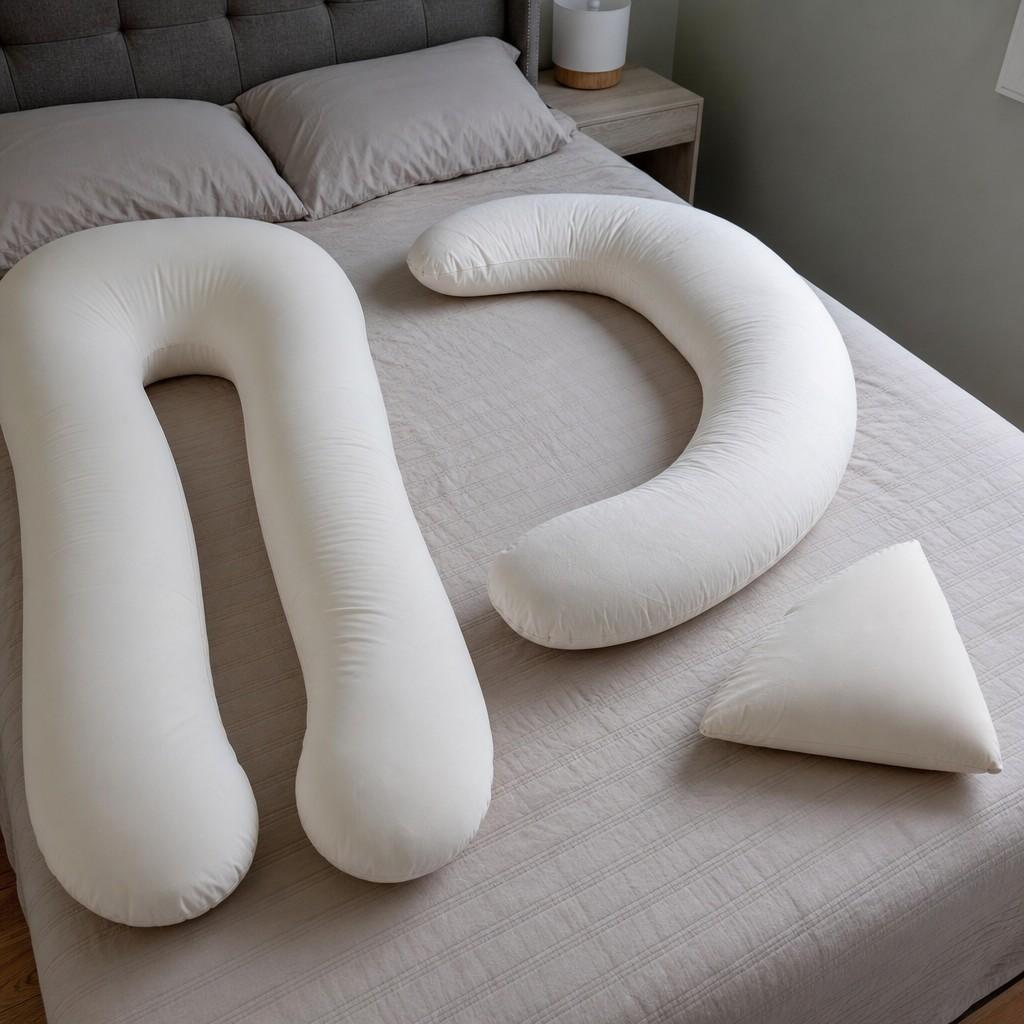
Pregnancy pillows come in a handful of standard shapes. Each solves a slightly different problem.
U-shaped pillows wrap around your whole body for support on both sides. You lie inside the U, with one side under your head and back and the other cradling your belly and knees. They are the most complete option, but they are large and can take up most of a queen bed.
C-shaped pillows curve around either your front or your back, not both. They are more compact than a U-shape and easier to reposition when you roll over in the night. Many people find them the easiest to live with long term.
J-shaped pillows give targeted support to your belly and head in one curved piece. They take up less space than a U or C shape and work well if you mainly need front support and a place to rest your head without a separate pillow.
Wedge pillows are small, firm, and aimed at one spot. Tuck one under your belly or against your lower back for targeted lift. They are the cheapest option and the easiest to pack for travel, but they do not support your whole body the way a full-length pillow does.
What to look for when buying
Shape gets you most of the way there. A few other details decide whether the pillow actually helps.
Fill determines how much the pillow gives under weight. Shredded foam molds to your shape and holds it. Solid foam or fiberfill stays firmer and pushes back more. Neither is wrong, but a very firm fill can feel unforgiving against a sensitive belly or hips.
A removable, washable cover matters more during pregnancy than almost any other feature. You will likely run warmer than usual at night, and a body-length pillow is hard to wash whole. A zip-off cover you can machine wash saves real hassle.
Breathable fabric helps if you sleep warm. Cotton or a cotton blend cover breathes better than tight synthetic fabric, especially once you are wrapped in several feet of pillow.
Length should roughly match your height. A pillow shorter than you are leaves your lower legs or head unsupported. If you are tall, check the measurements before buying rather than assuming one size fits everyone.
Firmness is personal, but side sleeping generally calls for more support than a plush pillow provides. A pillow that flattens out under your knee or belly stops doing its job within an hour.
How to position a pregnancy pillow for side sleeping
Many pregnant people are advised by their doctor or midwife to favor sleeping on their side, particularly later in pregnancy. Follow whatever guidance your own provider gives you, since individual circumstances vary.
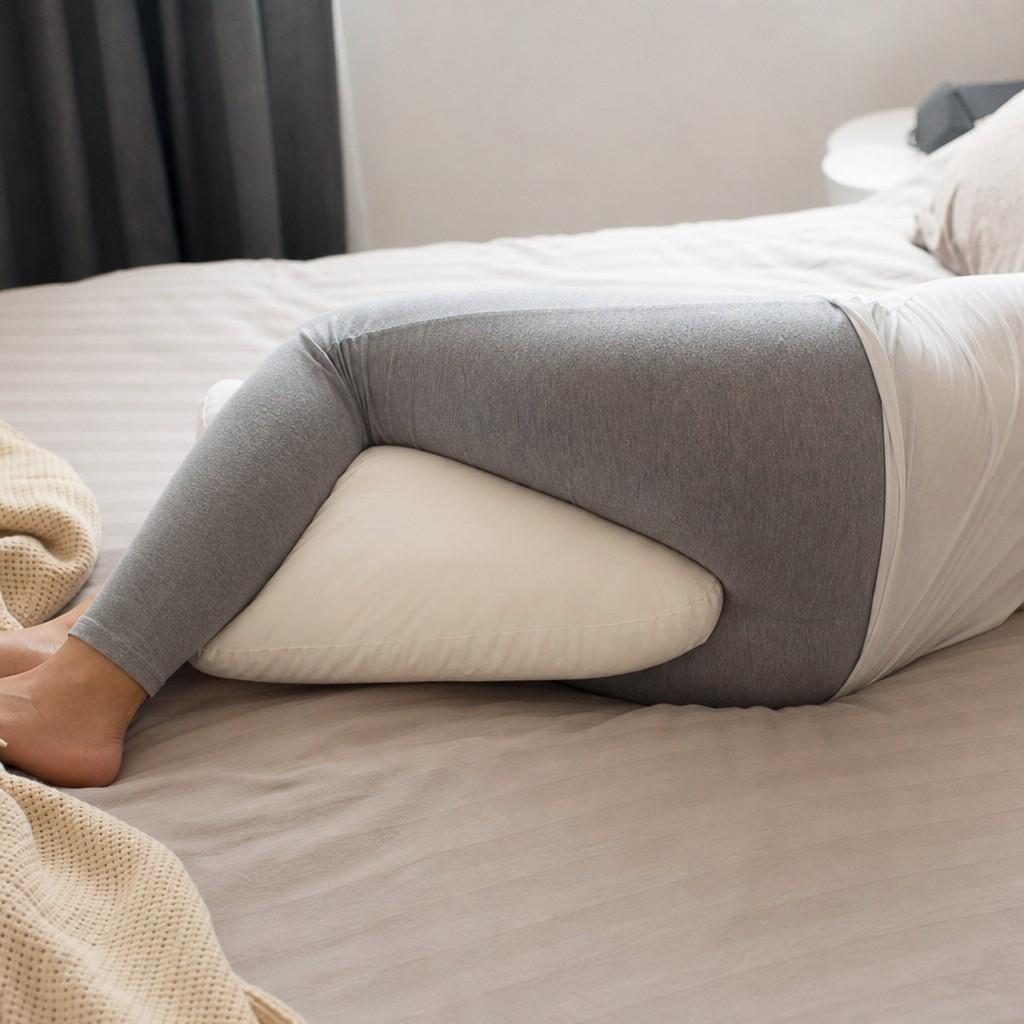
Once you are set up to sleep on your side, a pregnancy pillow supports three points at once.
- Between the knees, to keep your hips level and take pressure off your lower back.
- Under or against the belly, so its weight is not pulling on your back and side muscles.
- Behind the back, so you are not tempted to roll flat as you fall asleep.
A U-shaped pillow handles all three points in one piece. With a C-shape, J-shape, or wedge, you may need to adjust position more often through the night, which is normal.
Do you need a special pregnancy pillow, or will a regular body pillow do?
Often a plain body pillow is enough, at least to start. A long, straight body pillow tucked between your knees and against your belly solves the basic problem, keeping your spine aligned on your side.
The maternity-specific shapes earn their price by adding targeted belly support that a straight body pillow cannot give you, especially in the third trimester when belly weight becomes harder to ignore. If you are early in pregnancy or on a budget, start with a standard body pillow and upgrade later if you need more support. Our guide to body pillow sizes and shapes breaks down the standard options if you go that route.
After the baby: will you still use it?
Some shapes keep earning their keep after the birth, others do not. This is worth asking before you buy, since some of these pillows are an investment.
C-shaped and U-shaped pillows both convert well to nursing support after the baby arrives, propping up your arms and the baby at the same time. Wedge pillows keep working as back support long after pregnancy ends. A J-shape is the least likely to get reused, since its curve is built around a pregnant belly specifically.
If postpartum use matters to you, lean toward a C-shape or U-shape rather than a wedge or J-shape.
The bottom line
Start with shape, not price. A U-shape gives full support but needs bed space. A C-shape is the easiest all-around choice for most people. A J-shape or wedge suits a smaller budget or a smaller bed.
Whichever shape you pick, check the fill, the cover, and the length before you buy. For more on getting comfortable with any of these shapes once it is in your bed, see our guide on how to sleep with a body pillow.
And always follow your own doctor’s or midwife’s guidance on sleep position. The pillow is there to make that guidance easier to follow, not to replace it.