How Long Do Memory Foam Pillows Last
Most memory foam pillows last 2-3 years, though premium high-density versions can push 5-10 years with proper care.
The problem is, deterioration happens gradually: you might not notice you’re sleeping on a flattened, unsupportive lump until your neck starts complaining every morning.
Here’s how to know exactly when yours needs replacing.
How Long Should Your Memory Foam Pillow Actually Last?
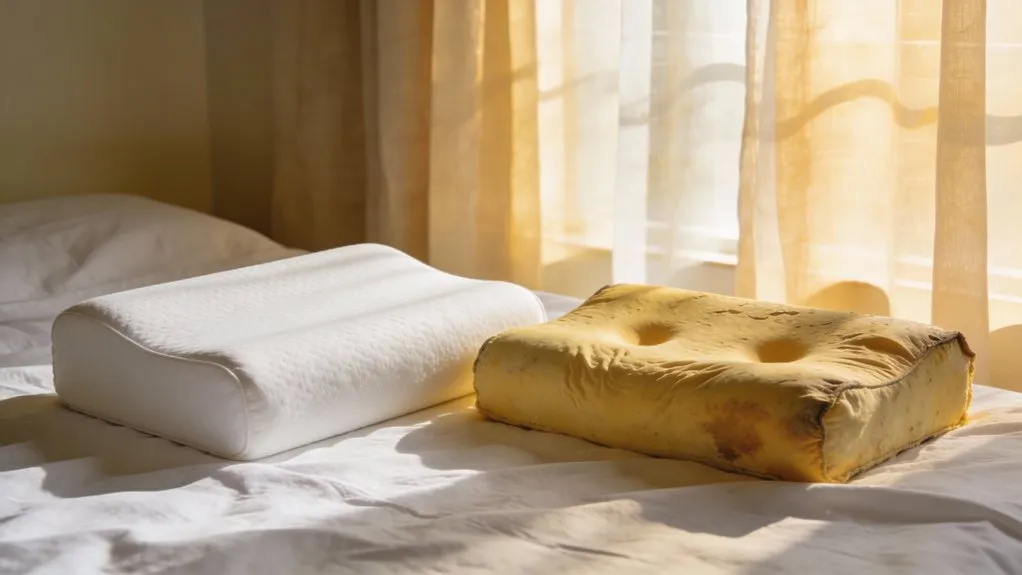
When should you toss out your memory foam pillow and start fresh? Most memory foam pillows last 2-3 years with regular use.
However, you’ll find premium pillow materials can push that lifespan to 5-10 years if you maintain them properly.
The difference comes down to foam density and how often you use it.
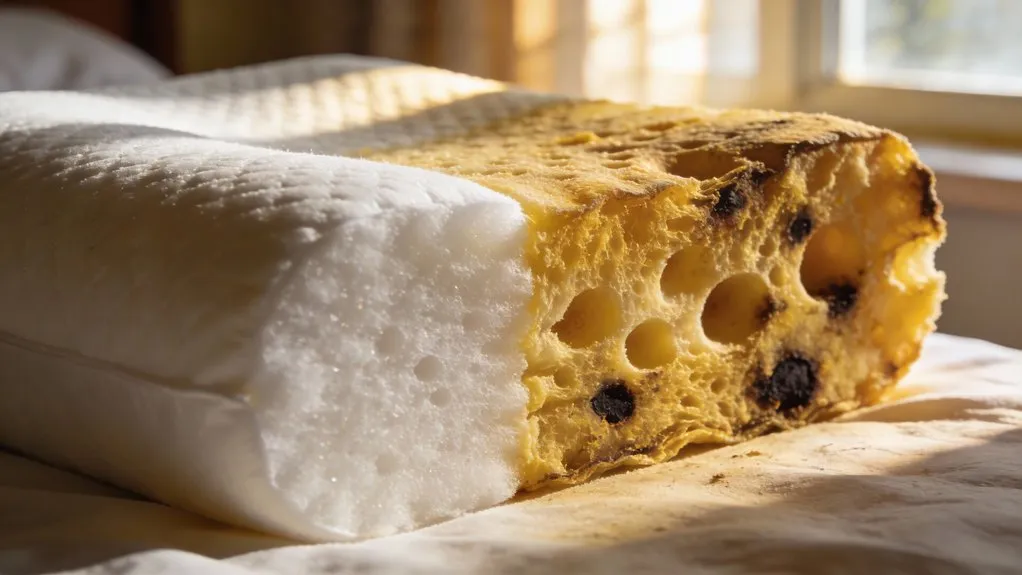
You’ll notice when it’s time for a replacement: your pillow loses its shape, develops lumps, or stops supporting your head correctly.
These signs mean your sleep quality is suffering.
To extend your pillow’s life, wash pillows regularly to eliminate bacteria and dirt that can degrade the foam over time.
Compare that to down or polyester pillows, which typically need replacing after just 1-2 years.
Why Higher-Density Memory Foam Pillows Last Twice as Long
Because memory foam density directly impacts durability, you’ll get double the lifespan from higher-density pillows compared to their budget counterparts.
Higher-density memory foam pillows deliver twice the lifespan of budget options, making them a smarter long-term investment for your sleep.
Higher-density options last 5-7 years, while lower-density versions wear out in 2-3 years.
The density benefits include superior shape retention and resistance to lumps, sagging, and compression.
This longevity comparison makes sense when you consider how denser material withstands daily use without significant deterioration.
The firmer structure maintains proper spinal alignment throughout its extended lifespan, and better weight distribution means consistent pressure point relief.
Memory foam and latex pillows can develop permanent indentations over time, so choosing higher-density options reduces the likelihood of this degradation.
You’re investing more upfront but replacing your pillow half as often.
5 Clear Signs Your Memory Foam Pillow Needs Replacing Now
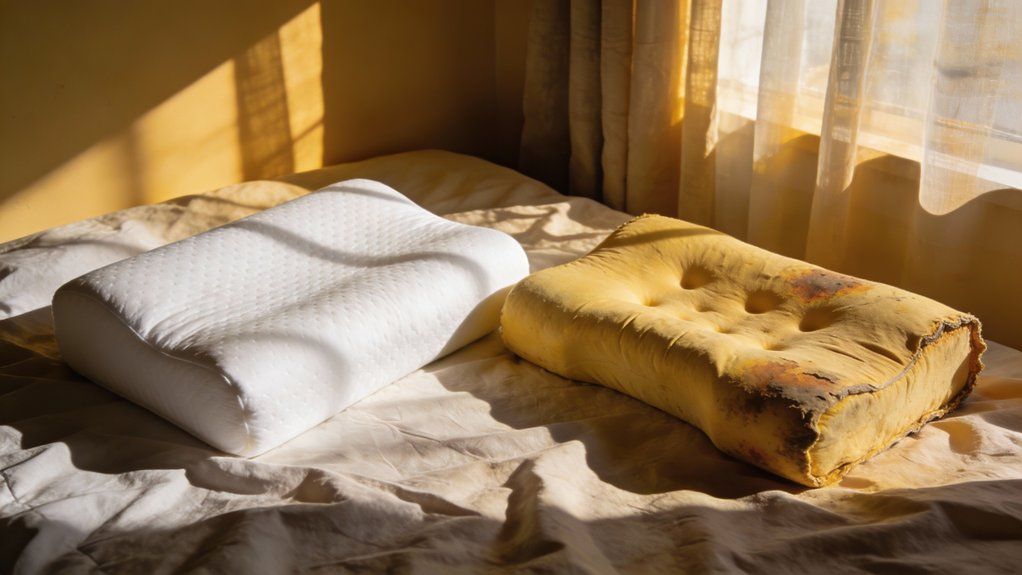
Even the best memory foam pillow won’t last forever, so knowing when to replace your pillow protects both your sleep quality.
- Watch for visible lumps or permanent indentations that prevent proper neck alignment.
- If you’re waking up with neck pain or stiffness, your pillow’s lost its supportive properties.
- Persistent odors that won’t wash out signal accumulated moisture and allergens, a clear pillow hygiene concern.
- When you fold the pillow in half and it doesn’t spring back to shape within seconds, the foam’s broken down.
These signs typically appear after 2-3 years, though high-quality options may last considerably longer.
The Fold Test: Know in 10 Seconds if Your Pillow Is Done
The fold test gives you an instant, no-guesswork way to check if your memory foam pillow‘s still doing its job.
Simply fold it in half and release.
A healthy pillow springs back to its original shape within seconds, while a worn-out one stays folded or creases permanently.
Here’s what a failed fold test means for your pillow:
- Lost density compromises spinal alignment during sleep
- Compressed foam can’t provide adequate support anymore
- Permanent creases signal it’s replacement time
- Reduced firmness affects sleep quality
- Your neck and shoulders won’t get proper cushioning
Make this testing frequency part of your pillow maintenance routine every few months.
Why Your Sleep Position Affects Memory Foam Pillow Wear
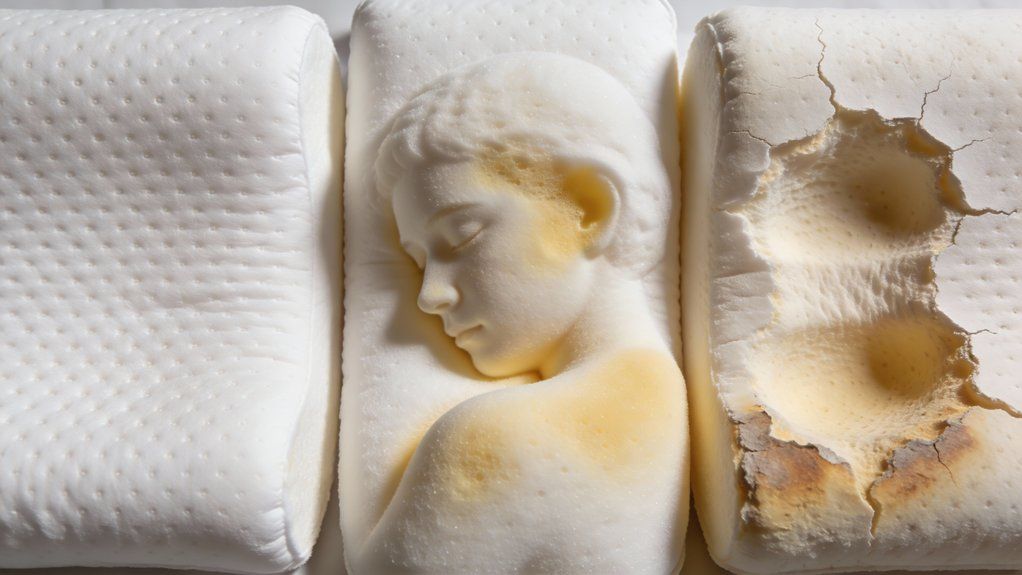
Your sleep position puts pressure on your pillow in completely different ways, which means your memory foam breaks down at different rates depending on how you sleep.
Side sleepers create concentrated compression points that accelerate wear, especially if you’re using lower-density foam. You’ll likely need replacement every 18-24 months.
Side sleepers face the shortest pillow lifespan due to concentrated pressure points that break down foam faster than other sleeping positions.
Back sleepers distribute weight more evenly, extending pillow longevity factors to 3-4 years with proper care.
Stomach sleepers flatten their pillows fastest since they need minimal loft, causing shape loss within 12-18 months.
Understanding sleep position impact helps you choose appropriate foam density and anticipate realistic replacement timelines.
Care Habits That Add 2+ Years to Your Pillow
Simple maintenance routines separate pillows that last two years from those still performing well at five.
Essential daily and weekly care habits:
- Wash your pillowcase weekly and pillow protector monthly to prevent oil buildup
- Fluff your pillow each morning to maintain shape and prevent foam compacting
- Rotate your pillow every three months for even wear distribution
- Store in cool, dry locations away from direct sunlight
- Use a removable, washable protector as your first defense against sweat and dust
- Machine wash your body pillow every 3-6 months to remove accumulated dirt, oils, and sweat that can degrade foam materials and harbor bacteria.
Washing and Storing Your Memory Foam Pillow Without Damage
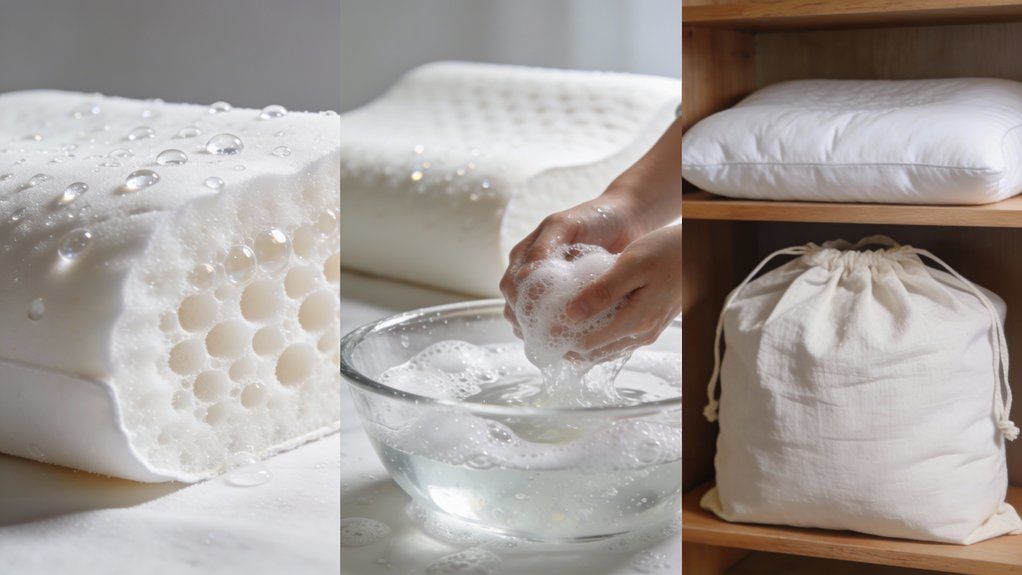
While most pillows can survive a washing machine cycle, memory foam requires a gentler approach that protects its specialized cellular structure.
Your best cleaning techniques involve spot-treating stains with a damp cloth and mild detergent: never submerge the entire pillow.
Wash your pillowcase weekly to remove oils and allergens.
For storage tips, keep your pillow in a cool, dry location away from direct sunlight, which degrades foam over time.
A removable protector shields against sweat and dust, reducing how often you’ll need to clean it.
Regular fluffing maintains the foam’s loft and extends its useful life by years.
Should You Replace or Keep Using Your Memory Foam Pillow?
Even with proper cleaning and storage, every memory foam pillow eventually reaches the end of its functional life. You’ll need to evaluate whether it’s time to replace your pillow (here you can find what studies say about pillow replacement).
Guidelines to help you decide:
- Visible lumps or permanent indentations that won’t recover
- Loss of original shape after 8 hours without pressure
- Waking up with neck pain or headaches
- Musty odors that persist despite pillow maintenance tips
- Age exceeding 3 years for standard pillows
If you’re experiencing discomfort or your pillow fails these tests, replacement isn’t optional: it’s necessary for quality sleep and proper spinal support.
What to Look for When Buying a Long-Lasting Memory Foam Pillow
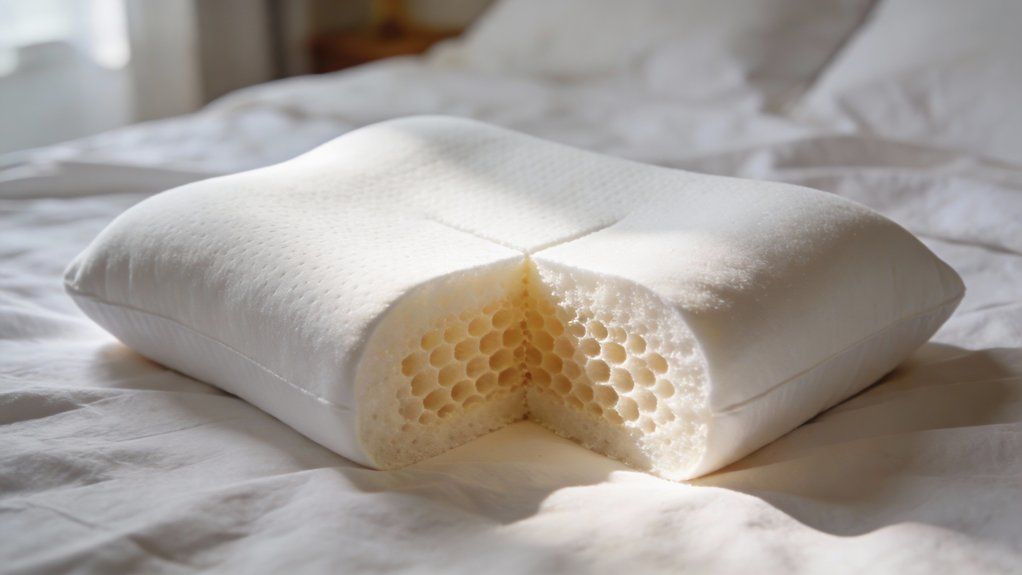
How do you separate marketing hype from genuine quality when shopping for a memory foam pillow?
- Start by checking foam density, look for 4-5 pounds per cubic foot for superior durability and support.
- Quality manufacturers back their products with 5-10 year warranties, demonstrating confidence in longevity.
- Examine pillow materials carefully, prioritizing options with removable, machine-washable covers for easier maintenance.
- Premium pillows often feature cooling technologies and hypoallergenic properties that enhance long-term usability.
- Finally, select a design matching your sleeping position, side, back, or stomach, to guarantee proper alignment and minimize premature wear from incorrect support.