How Often Should You Replace Your Pillow? (What Research Shows vs. Marketing)
Still using that favorite pillow you’ve had for years? Wondering if it’s actually time for a replacement?
Most of us hold onto our pillows far too long. When it comes to replacing them, we rarely think about when they actually need changing out.
How often should you change your pillows? The answer depends on what kind of material your pillow is made of and how it’s actually performing. The “replace every 2 years” rule you’ve probably heard? That’s mostly marketing rather than science.
Research on pillow replacement shows the real answer is more nuanced than a calendar date.
The Truth About Pillow Replacement Timelines
The general recommendation you’ll see everywhere is to replace your pillows every 1-2 years. But here’s what the research actually shows: there are no controlled studies proving pillows universally fail at 24 months.
That timeline came from expert guidelines and manufacturer recommendations, not from scientific evidence.
What actually matters: How your pillow performs, not how old it is.
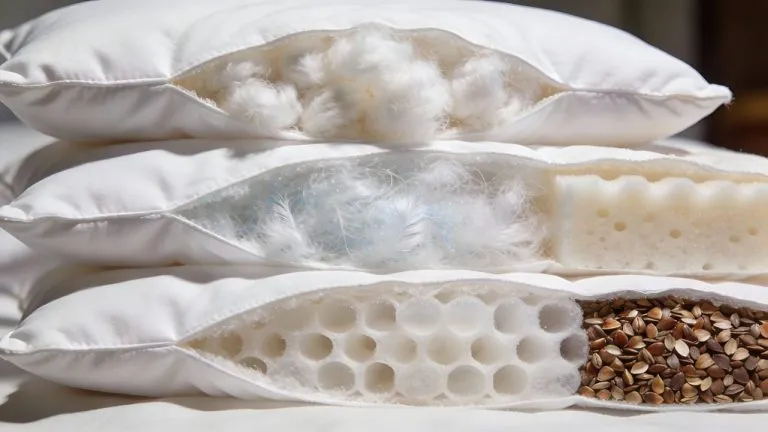
Different pillow types do have different realistic lifespans:
- Polyester fill: 1-2 years (compresses fastest)
- Memory foam: 2-4 years (depends heavily on foam quality)
- Down and feather: 5-8 years (can be revived with proper care)
- Latex: 5-10 years (maintains shape longest)
These ranges depend on your body weight, sleep hours per night, and how well you maintain them.
Why Replace Your Pillow At All?
Replacing your pillow becomes necessary when it stops doing its job: supporting your head at the right height without aggravating allergies or causing pain.
As pillows age, they can lose their shape and firmness, which causes alignment problems while you’re sleeping.
The fill material may shift, clump, or flatten due to regular use and washing. This leads to uneven weight distribution that can cause neck pain and shoulder discomfort.
Additionally, pillows can accumulate sweat, dead skin cells, body oil, and other debris. Research shows dust mite allergen levels build up over time, particularly in synthetic pillows.
But here’s the key finding: allergen-proof covers reduce mite exposure more effectively than frequent pillow replacement.
Real Signs Your Pillow Needs Replacing
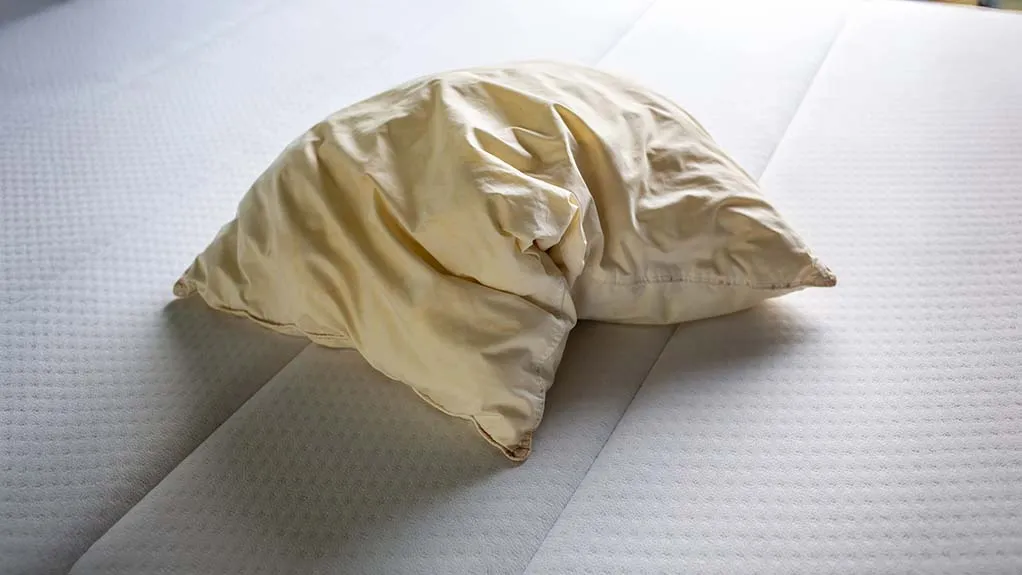
Forget the calendar. Watch for these actual performance indicators:
- Your pillow is lumpy or has permanent depressions (try washing and drying first with a gentle cycle)
- You often wake up with a sore neck, headaches, or stiff shoulders that weren’t there before
- The pillow fails the fold test: fold it in half, and it stays folded instead of springing back
- It has an unpleasant odor despite washing and airing it out regularly
- It shows visible deterioration like fraying seams or exposed stuffing material
- You can’t get stains out anymore despite proper cleaning
Notice “2 years old” isn’t on that list. A well-maintained pillow with proper support can last much longer.
Yellowing happens to all pillows from sweat and body oils. If the pillow still provides proper support and you’re using protective covers, cosmetic yellowing inside the cover doesn’t affect function.
How to Actually Extend Pillow Life
Research-backed strategies that work better than arbitrary replacement schedules:
Use protective barriers: A pillow protector plus a regularly-washed pillowcase creates a barrier system. The protector catches what the pillowcase misses.
Studies show zippered, tightly-woven protectors prevent dust mite colonization and significantly extend functional pillow life.
Wash regularly: Most pillow fills (except memory foam) can be machine washed. Quarterly washing removes allergens before they accumulate to problematic levels.
Memory foam pillows need spot cleaning and good airflow. Proper drying techniques after washing help maintain pillow integrity.
Fluff and rotate: Daily fluffing redistributes fill and prevents permanent compression in one area. Some materials (down, polyester) benefit from this more than others (solid foam).
Protect from damage: Keep your pillows away from direct sunlight and excessive moisture, as both can degrade materials over time.
Vacuum regularly: Shake out or vacuum your pillows to remove dust and debris that accumulates over time.
Check the care tag on your pillow to see if it can be machine washed. Read more: How To Wash Memory Foam Pillows.
These steps will help extend pillow life while keeping them fresh and hygienic, both essential for good quality sleep.
Variables That Actually Matter
Your body weight: Heavier individuals compress fill faster. If you’re over 200 pounds, expect the shorter end of lifespan ranges. Under 150 pounds, you’ll likely hit the longer end.
Sleep hours: Sleep 6 hours nightly vs. 9? That’s a 33% difference in wear. Work night shifts and use your pillow for daytime sleep too? Cut the lifespan estimates accordingly.
Your environment: Hot, humid climates accelerate dust mite reproduction. Running a dehumidifier below 50% humidity does more to slow pillow degradation than following arbitrary replacement schedules.
Material quality: A $100 down pillow from a reputable manufacturer with high fill power will outlast a $100 memory foam pillow with cheap foam. Initial price doesn’t predict longevity, material quality and construction do.
Lifestyle factors: If someone smokes around bedding, consider replacing more frequently due to toxin buildup in materials over time.
Types of Pillows to Consider
When your pillow no longer provides good support, it’s time to consider replacing it. Different types suit different sleepers and sleeping positions:
Memory Foam: Conforms to the shape of your head and neck for optimal support. Usually made of foam combined with materials like latex or polyester. Lasts 2-4 years depending on foam quality.
Down/Feather: Feathers provide cushioning while down creates a softer feel. Often softer than memory foam but can offer extra durability if cared for properly. Can last 5-8 years with maintenance.
Latex: Made from natural latex, these are bouncy yet supportive. They reduce pressure on shoulders, neck, and back while remaining cool at night. Longest lifespan at 5-10 years.
Gel: Filled with tiny beads or liquid gel capsules that contour to your body’s natural shape, making them extremely comfortable and cool. Lifespan similar to memory foam.
Buckwheat Hull: Composed of organic hulls that mold to your head and body weight. The hulls move freely within the fabric, adjusting to multiple sleeping positions throughout the night.
Finding the right pillow could mean the difference between restful nights or dealing with aches and pains each morning. Whatever you decide should ensure quality sleep for your sleep position.
What to Do With Old Pillows
When your pillow does fail the performance tests, you have options beyond the trash.
Old pillows can be reused or repurposed for many creative projects:
- Pet beds for dogs or cats
- Quilt batting for patchwork quilts
- Decorative floor cushions
- Stuffing for handcrafted toys
- Padding for shipping fragile items
The Bottom Line
Replace your pillow when it stops performing, not when the calendar says so. That might happen at 18 months for a cheap polyester pillow used by a heavy sleeper in humid Florida, or at 8 years for a quality latex pillow used by a lighter sleeper in dry Colorado.
Monitor your pillow’s actual performance. Use protective covers. Wash it regularly. When you start waking up with neck pain that wasn’t there before, or when the fold test fails, or when you can’t get it clean anymore, that’s when it’s actually time to replace it.
The pillow industry wants you replacing on schedule. The research says replace based on condition. Your wallet and your neck will thank you for knowing the difference.