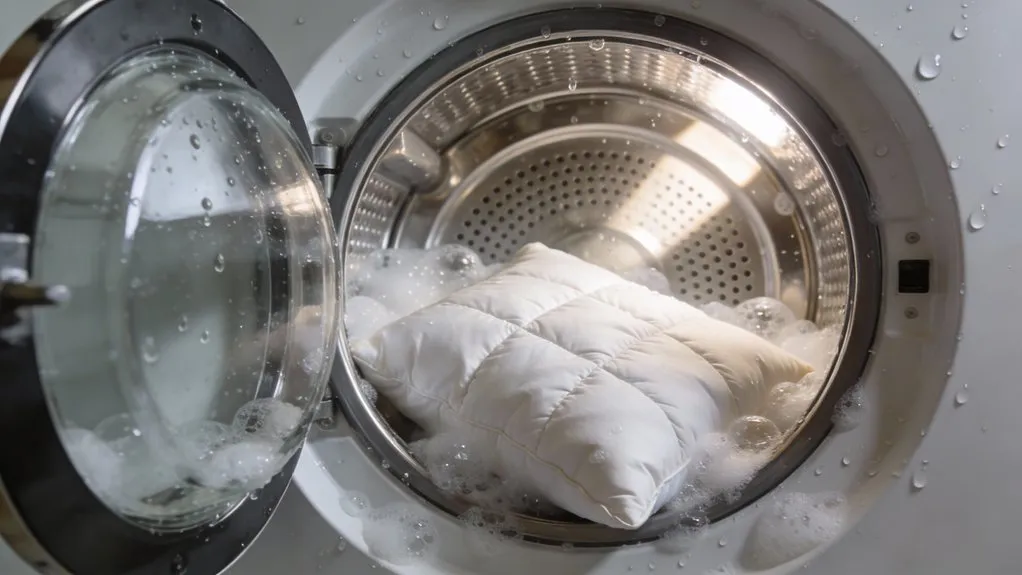
How to Machine Wash Down Pillows
You’ve probably noticed your down pillows looking flat and grimy after months of nightly use. The good news? You can toss them right in your washing machine without a trip to the dry cleaner.
The trick is doing it correctly so you don’t end up with lumpy, mildewed disasters. Most people make critical mistakes that ruin their pillows permanently, but if you follow the right steps, your pillows will come out fluffy and fresh.
Check Down Pillows for Tears Before Washing
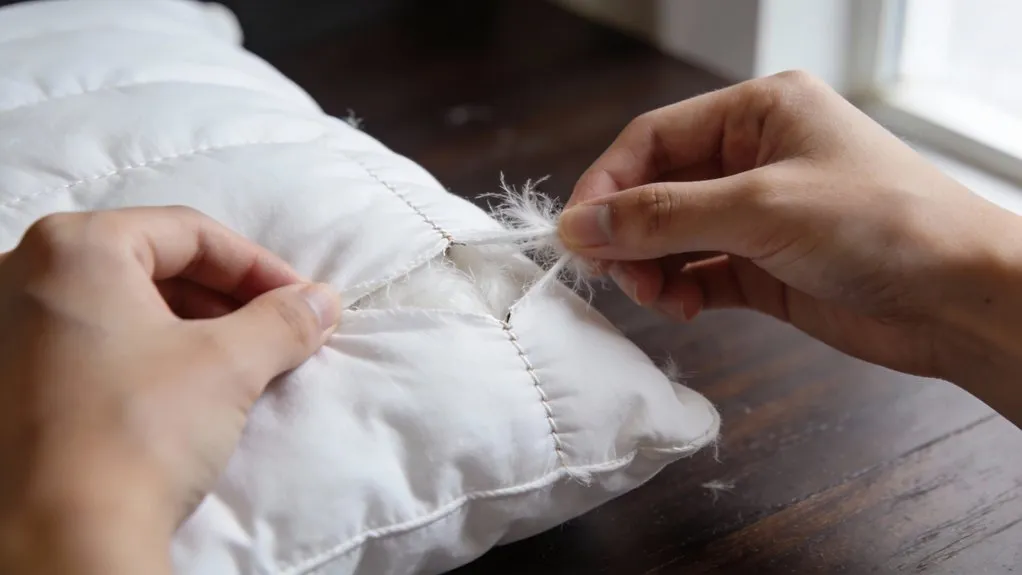
Before you toss your down pillows into the washing machine, take two minutes to examine them closely for damage:
- Look for visible tears or rips in the fabric that could worsen during washing.
- Check the seams carefully; weak stitching can split open and release the down filling.
- If you spot any tears, grab a needle and thread for quick tear repair before washing.
This simple pillow maintenance step prevents catastrophic fill loss and keeps your pillows supportive.
A damaged pillow that goes through the wash cycle will lose its plush feel and effectiveness.
Down pillows might need replacement after a few years, so catching damage early helps you maximize your pillow’s lifespan and get the most from your investment.
Use a Front-Loading Washer and Balance Two Pillows
Once your pillows pass inspection, head to a front-loading washing machine rather than a top-loader:
- Front loading benefits include gentler cleaning action that won’t tear delicate down or create clumps.
- Top-loaders with center agitators are too aggressive and can damage your pillows beyond repair.
Here’s an essential washing tip: always wash two pillows together:
- This balances the load and prevents your machine from shaking violently during the spin cycle.
- The paired pillows distribute weight evenly, protecting both your washer and your bedding.
- You’ll get cleaner results and avoid potential mechanical problems from an unbalanced drum.
For pillows with delicate materials like memory foam, hand washing is the recommended method instead of machine washing to prevent damage to the foam structure.
Set Your Washer to Cool Water and Delicate Cycle
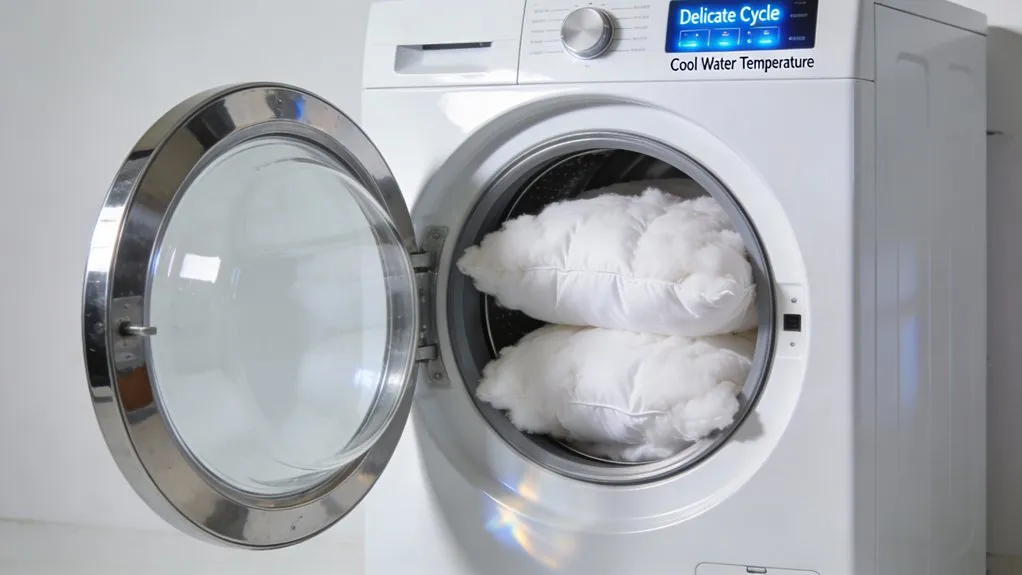
With your pillows loaded in the machine, adjust the temperature dial to cool or warm water, never hot. Hot water damages delicate down fibers and can cause clumping.
- Select the delicate cycle from your machine settings. This option reduces agitation that could harm the fill’s structure.
- If available, choose the extra rinse setting; it’ll flush out all detergent residue that might otherwise stiffen your pillows.
- Use a mild, low-sudsing detergent made specifically for down products.
The right combination of temperature and cycle preserves your pillows’ loft and longevity.
Choose a Low-Sudsing Detergent: Skip Softeners and Bleach
The detergent you choose makes all the difference in protecting your down pillows’ delicate fill. Always select a low-sudsing formula designed for down or delicate items.
Choose a low-sudsing detergent specifically formulated for down to preserve your pillows’ delicate fill and maintain optimal loft.
Regular detergent types create excessive foam that’s difficult to rinse out completely, leaving residue that clumps the down and ruins its loft.
Here are key washing tips: skip fabric softeners entirely, as they coat the fibers and reduce insulation. Never use bleach, it damages the down’s structure and shortens your pillow’s lifespan.
Before washing, check your pillow’s care label for specific detergent recommendations.
Run a Pre-Wet, Full Wash, Then Extra Rinse Cycle
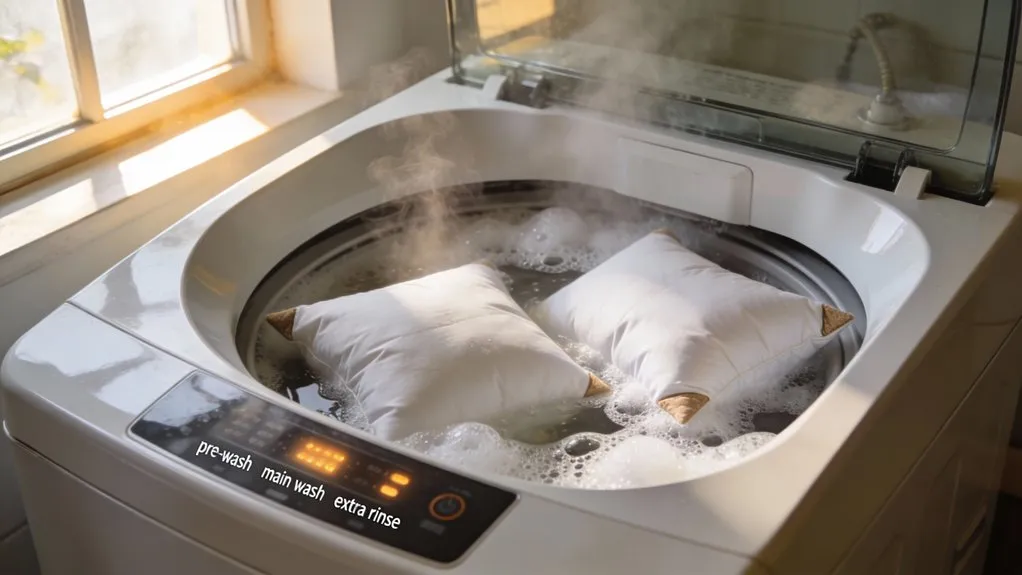
Before you add detergent, run a pre-wet cycle to saturate your pillows completely. This guarantees even cleaning throughout the fill.
Once they’re thoroughly soaked, start a full wash using the permanent press setting with your detergent choice. A gentle, low-sudsing formula works best.
After the wash finishes, run an extra rinse cycle to flush out all remaining soap residue. Leftover detergent causes clumping and can irritate your skin.
Always wash two pillows together to balance the load and protect both the machine and pillows.
Before drying, squeeze each pillow gently to check for soap suds or down clumps.
Press Out Excess Water: Don’t Wring or Twist
Remove your freshly washed pillows from the machine and carry them to a clean, flat surface where you can work comfortably.
- Place each pillow between two clean, dry towels and press down firmly to absorb excess moisture.
- Never wring or twist your pillows: doing so causes clumping and ruins the fill’s loft.
If they’re still heavy with water, repeat the towel method until they feel manageable.
Your pillows should feel damp but not waterlogged before moving to the dryer.
Tumble Dry on Low Heat With Wool or Tennis Balls
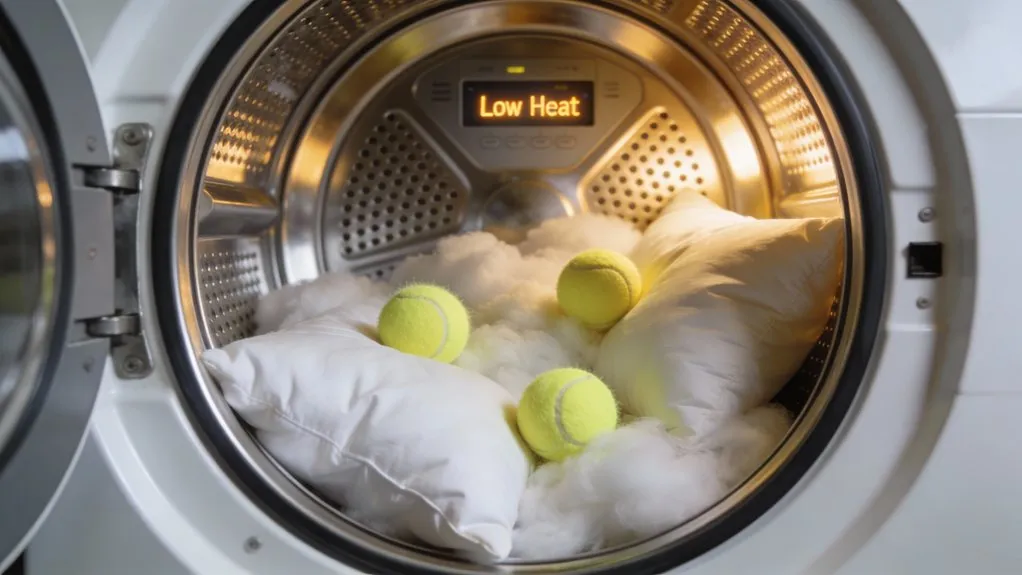
Set the dryer temperature to low heat. Toss in two or three wool or tennis balls: they’ll break up clumps and redistribute the fill as the pillows tumble.
As the dryer runs, down filling naturally sticks together and forms stubborn clumps that won’t break apart on their own.
Every 30 minutes, pause the cycle to fluff them. Pull out the pillows and gently shake them. Break apart any remaining clumps by hand.
The entire process takes 2-3 hours depending on pillow density.
Completely dry pillows prevent mildew and musty odors from developing later. Patient, thorough drying guarantees your pillows stay fresh, fluffy, and free from deterioration.