Do Cooling Pillows Actually Work?
Cooling pillows promise to be your escape hatch from sweaty, sleepless nights, but the reality is more complicated than the marketing suggests.
But here’s what actually happens: most cooling pillows work for about 10 to 30 minutes before they warm up to match your body temperature.
The question isn’t whether they cool at all, but whether that brief window of relief is worth your money.
How Do Gel, Water, and PCM Cooling Pillows Actually Work?
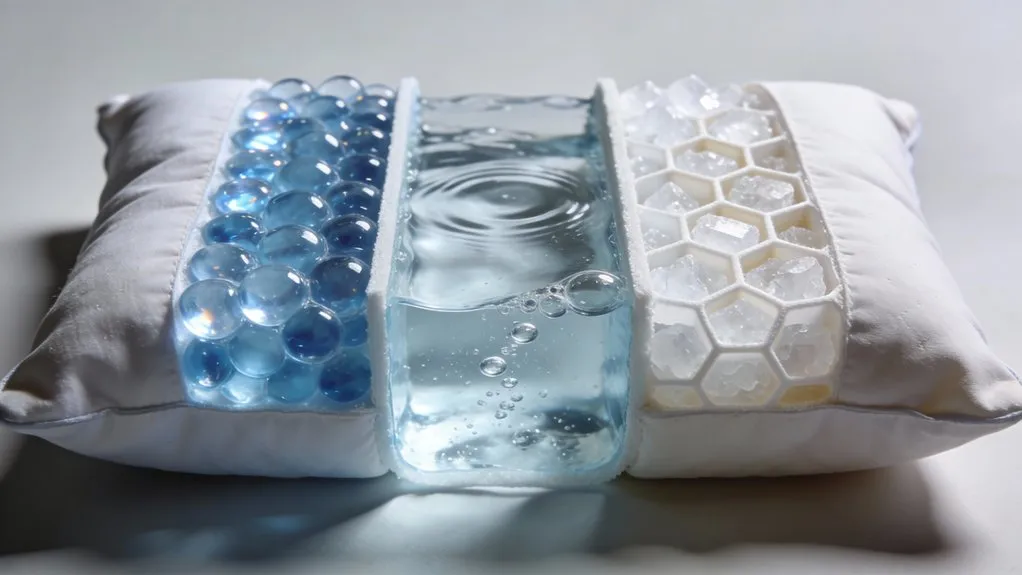
Cooling pillows promise relief from night sweats and hot sleep, but their mechanisms work quite differently from one another.
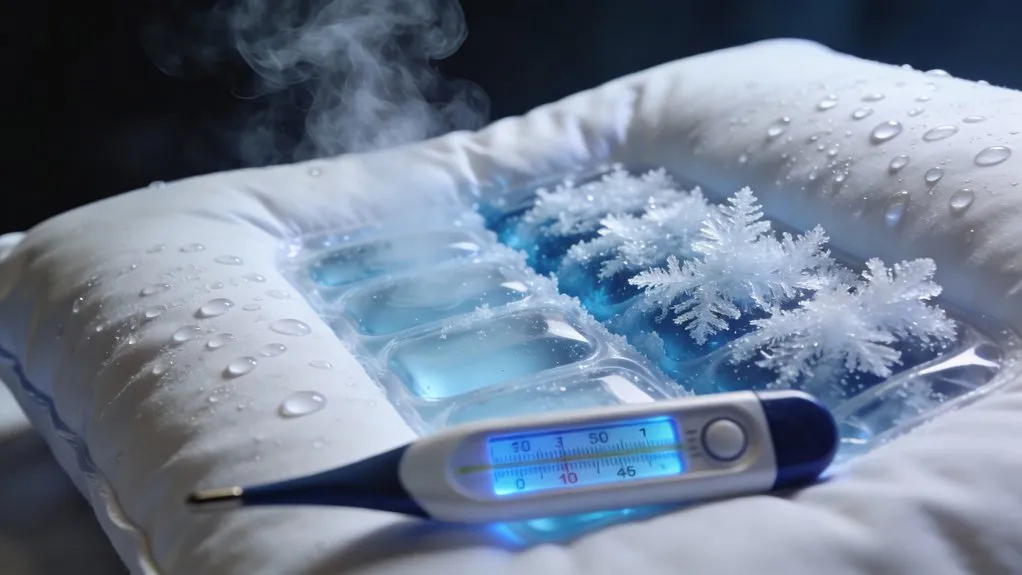
- Gel properties allow these pillows to absorb heat temporarily, though they warm up after about ten minutes.
- Water conduction draws heat away more effectively, maintaining coolness for roughly 30 minutes before equilibrium.
- PCM behavior involves materials that shift states while absorbing heat, but results vary widely between products (PCM cooling pillows on Amazon).
- Buckwheat benefits include superior breathability; these pillows return to room temperature in under two minutes.
All types start around 75 degrees and climb to 87-89 degrees within 15 minutes.
How Long Does the Cooling Effect Really Last?
How long will your cooling pillow actually keep you comfortable?
- Most cooling pillows reach temperature equilibrium with your body heat within 10 to 30 minutes.
- Water-based options maintain their chill for about 30 minutes, while gel pillows lose their cooling sensation within the first 10 minutes.
- Buckwheat pillows excel at breathability, expelling heat and returning to room temperature in under two minutes, compared to 90 minutes for water pillows.
- Phase-change material pillows offer initial relief but struggle with heat retention as the night progresses.
The cooling duration you’ll experience depends entirely on your pillow’s design and materials.
What Does Research Say About Cooling Pillow Effectiveness?
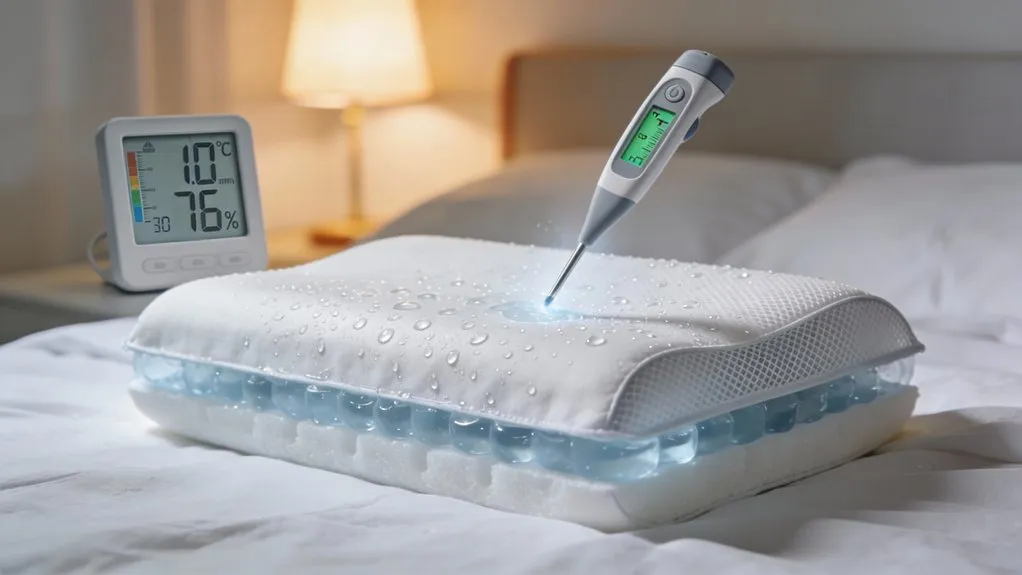
While manufacturers make bold promises about their products, scientific studies paint a more nuanced picture of cooling pillow performance.
- Research confirms that temperature regulation directly impacts your sleep quality, with the ideal sleeping environment hovering around 68 degrees Fahrenheit.
- The cooling science behind different materials varies considerably. Phase-change materials and gel layers absorb heat initially, but their effectiveness drops after a few hours.
- Buckwheat hulls demonstrate superior performance in studies, maintaining consistent airflow and returning to room temperature faster than foam or gel alternatives.
Customer data supports these findings, showing measurable preference for breathable materials over synthetic cooling technologies.
Who Actually Feels the Difference: Night Sweats vs. Hot Rooms?
Your body’s heat source matters more than you’d think when choosing a cooling pillow. Night sweats benefits are clear: you’re producing internal heat and moisture that cooling pillows actively manage through improved airflow and heat absorption.
If you perspire during sleep, these pillows draw warmth away from your head effectively.
However, hot room challenges present a different scenario. When your bedroom exceeds 68 degrees Fahrenheit, cooling pillows struggle against high ambient temperatures. They only cool locally, not your entire environment.
Cooling pillows can’t overcome a hot bedroom. They provide localized relief, not room-wide temperature control.
Hot sleepers who sweat see real results, while those battling warm rooms often need better air conditioning first. Body pillows with customizable fill weight can also be selected to reduce heat retention and improve nighttime comfort for those sensitive to temperature.
When Are Cooling Pillows Just Marketing Hype?
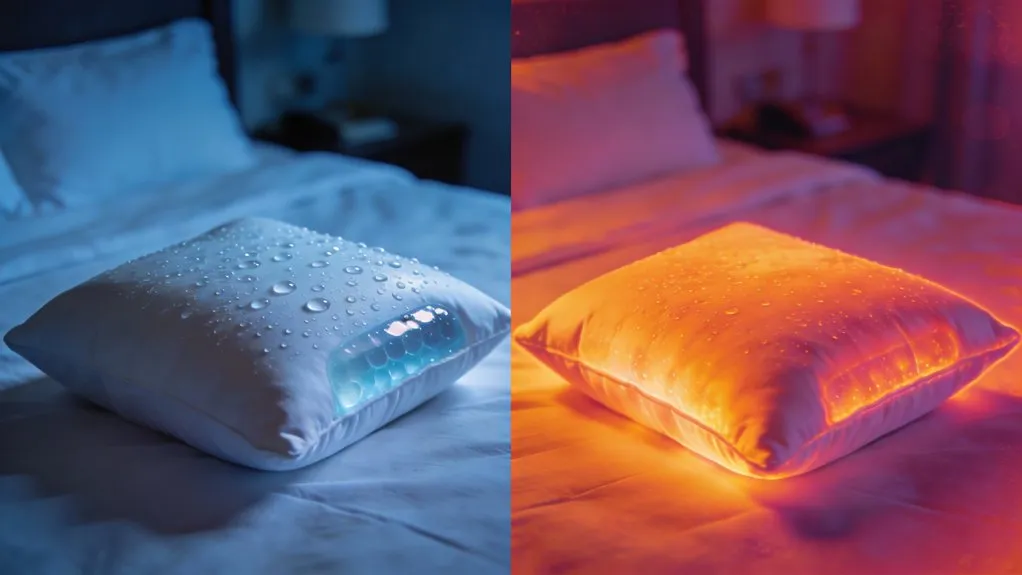
Why do so many cooling pillows feel cold for mere minutes before reverting to ordinary pillows? The answer lies in how marketing strategies outpace actual performance.
Most cooling pillows start just above room temperature, then climb to 89 degrees within 15 minutes. Phase-change materials provide that initial chill you notice, but they can’t maintain it throughout the night.
Consumer expectations, shaped by aggressive advertising, rarely match reality. Gel and water-based options particularly disappoint users who sleep hot consistently.
You’re paying premium prices for technology that delivers temporary comfort, not the all-night temperature regulation promised on the package.
Which Cooling Pillow Materials Outperform Gel and PCM?
Natural materials consistently outperform their synthetic counterparts when it comes to actual cooling performance.
When it comes to keeping you cool at night, natural materials deliver real results that synthetic options simply can’t match.
Buckwheat benefits include expelling heat 3.5 times faster than gel or PCM options while maintaining comfortable temperatures throughout the night.
Memory foam with gel layers feels cool initially but loses effectiveness within ten minutes.
Water pillows provide brief relief, then reach equilibrium after 30 minutes.
Natural materials like eucalyptus fiber and organic cotton regulate temperature better through superior breathability and airflow.
PCM technology sounds impressive, but its cooling effects rarely match the consistent performance you’ll get from breathable natural fillings.
What Should You Look for in a Cooling Pillow That Actually Stays Cool?
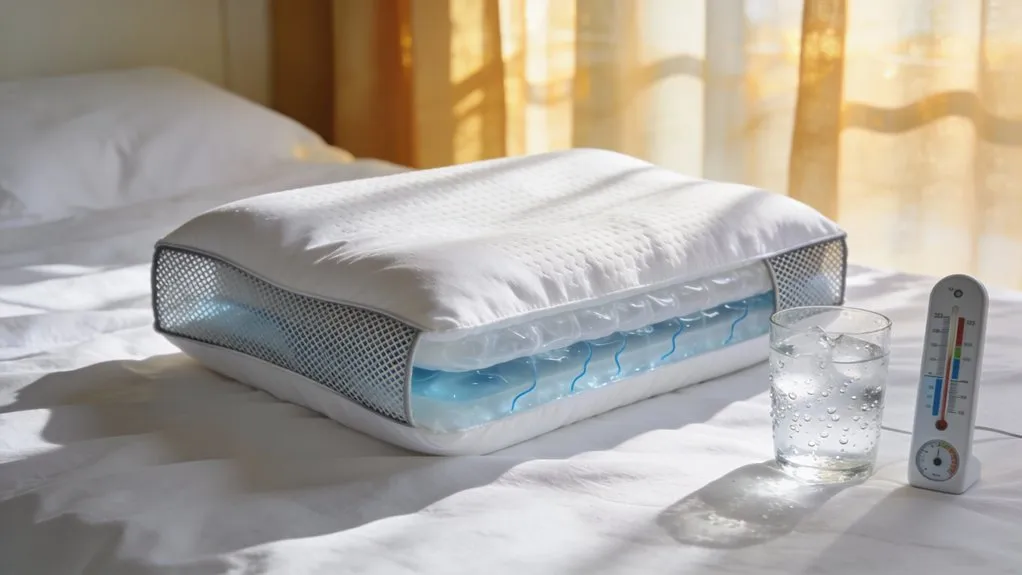
How can you separate genuine cooling technology from marketing hype? Look for phase-change materials that actively regulate temperature instead of gel foam that simply feels cool at first.
You’ll want breathable covers made from bamboo, eucalyptus fiber, or organic cotton: these wick moisture and maintain airflow throughout the night.
Adjustable loft matters because it affects air circulation around your head and neck.
Read long-term reviews carefully, since many pillows lose cooling effectiveness after several weeks.
Proper pillow maintenance, including washable covers and good ventilation between uses, helps preserve cooling technology performance over months of nightly use. Bamboo covers specifically contain Bamboo Kun, an antimicrobial component that enhances moisture absorption and helps maintain the pillow’s cooling effect naturally.