Pillow Protectors vs Pillowcases: Do You Need Both
You’ve probably noticed pillow protectors and pillowcases in bedding aisles and wondered if you’re missing something. Most people skip the protector and go straight for the pillowcase, it seems like enough.
But here’s what changes when you add that extra layer: your pillow stays cleaner for years instead of months, allergens can’t penetrate as easily, and you’re not washing yellowed fabric that never quite comes clean.
The question isn’t whether they’re different, but whether that difference matters for your sleep setup.
What Makes Pillow Protectors Different From Pillowcases?
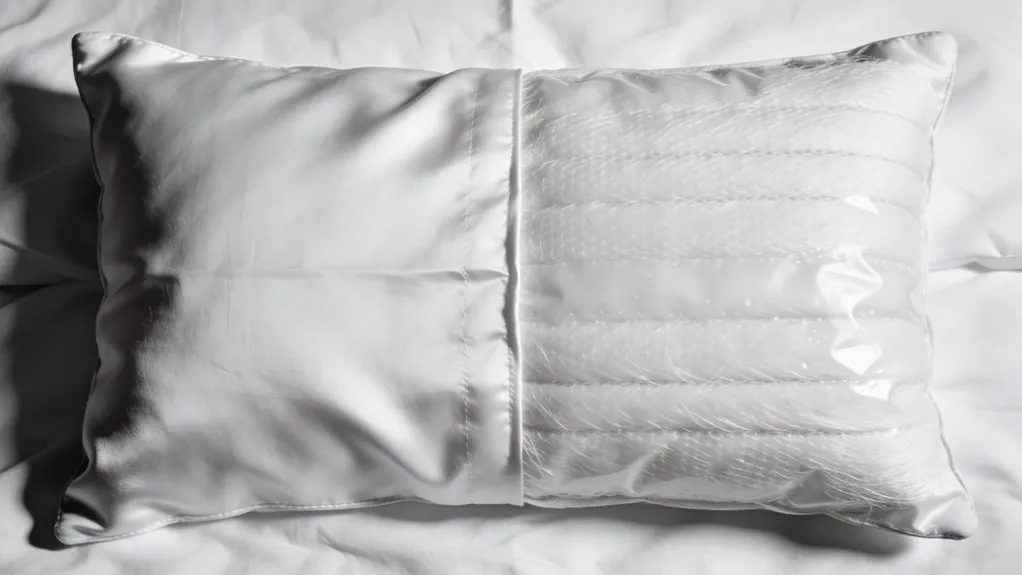
Pillowcases and pillow protectors are distinct items with different primary functions, though some web shops, like Amazon, occasionally blur the lines in product listings (pillowcases vs. pillow protectors on Amazon).
- Pillowcases serve as decorative, removable outer covers that slip over the pillow for style and comfort.
- Pillow protectors are inner encasements (often zipped) designed for barrier protection against allergens, moisture, stains, and wear.
This functionality comparison reveals their distinct purposes: pillowcases focus on comfort and style, while protectors prioritize defense.
The protective benefits come from specialized materials like waterproof or hypoallergenic fabrics that block sweat, oils, dust mites, and stains.
You’ll wash your pillowcase weekly, but protectors only need cleaning every 1 to 2 months.
Pillowcases deliver softness in cotton or silk, while protectors extend your pillow’s lifespan by preventing the daily wear that causes deterioration. Using a pillow protector is one of the most effective maintenance tips for pillows to keep them clean and fresh over time.
Do You Really Need Both a Protector and a Pillowcase?
If you want maximum protection for your pillow, the answer is straightforward: yes, you need both.
Think of it as a two-layer defense system for sleep hygiene. The protector blocks sweat, oils, and spills from reaching your pillow’s core, while the pillowcase provides comfort and catches surface debris.
Together, they create superior allergen protection that a single layer can’t match. You’ll wash your pillowcase weekly and the protector every month or two.
This combo keeps your pillow cleaner longer and creates a healthier sleep environment. Since pillows can yellow from sweat, moisture, and skin oils, using both a protector and pillowcase helps prevent discoloration and extends your pillow’s lifespan. It’s a small investment that delivers significant returns.
Which Materials Work Best for Protectors and Pillowcases?
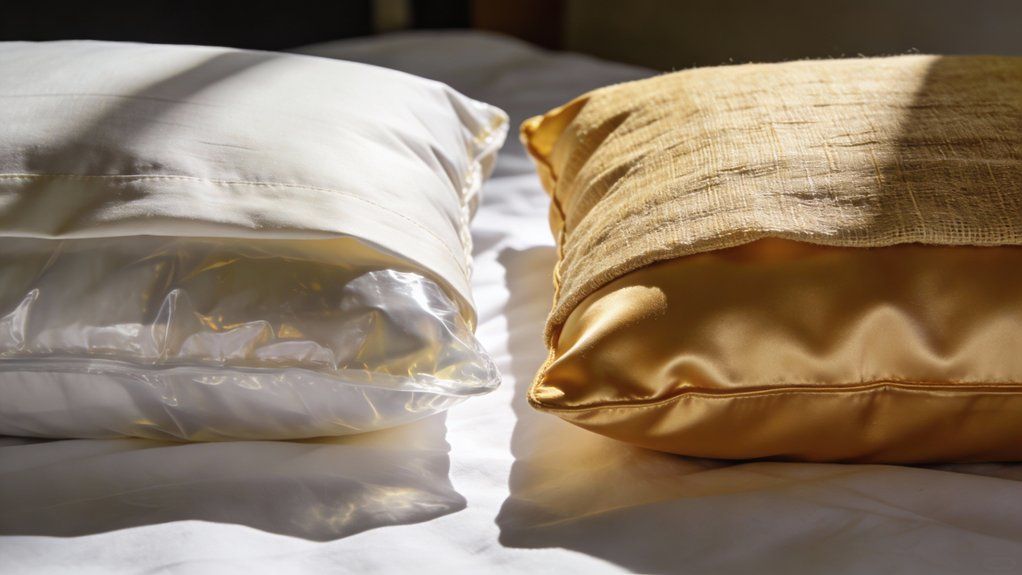
Material comparisons reveal distinct roles: protectors prioritize breathability and barrier protection, while pillowcases focus on surface comfort.
- Tencel fibers excel for protectors with superior temperature regulation and allergen defense, ideal for sensitive skin.
- Egyptian cotton suits both layers due to its long-staple durability and softness.
- Tailor pillowcases to your preferences: silk delivers luxurious cooling, cotton provides breathable classic feel, and microfiber offers affordable softness.
Always check for Oeko-Tex certification to ensure bedding is free from harmful chemicals.
How Often Should You Wash Protectors vs Pillowcases?
Pillowcases: Wash pillowcases weekly to combat facial oils, sweat, and bacteria buildup, aligning with hygiene standards from experts like Martha Stewart.
Pillow protectors: They need washing every 2-4 weeks under normal use, or monthly for heavy sweaters/allergies. Less often (1-2 months) if lightly used, per guides from Wirecutter and others.
Spills require immediate washing. Vacuum protectors between cycles to reduce allergens. Dry both on low heat or air-dry to avoid shrinkage.
Expert vs Actual Habits
Recommendations prioritize health (e.g., reducing 17x bacterial growth after one week), but surveys indicate people wash pillowcases biweekly on average due to busy lives, highlighting a gap worth bridging for better sleep hygiene.
Choosing Pillow Protectors: Fit, Fabric, and Closure Types
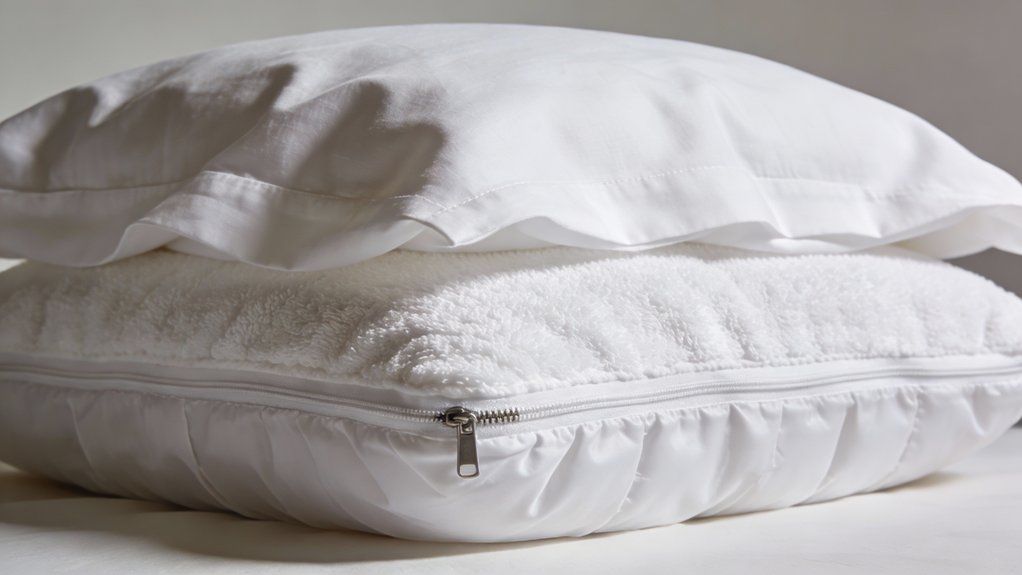
Before you buy a pillow protector, you need to match it exactly to your pillow’s dimensions: standard (20×26 inches), queen (20×30 inches), or king (20×36 inches).
A snug fit maintains shape and maximizes pillow protector benefits like moisture and allergen defense.
When selecting pillow fabrics, choose breathable materials such as cotton or bamboo for better air circulation and temperature control.
For closures, zippers provide secure containment while envelope-style openings offer removal for quick removal.
Look for double-row stitching and quality zippers, they’ll last years longer.
If you’re prone to allergies, hypoallergenic protectors effectively block dust mites and other irritants. Bamboo protectors are particularly effective because bamboo fibers contain Bamboo Kun, which has natural antimicrobial properties that help repel allergens.
Who Should Use Pillow Protectors?
Many bedding experts and consumer organizations describe pillow protectors as an underrated essential for hygiene and pillow longevity, which can feel surprising if you’ve mainly thought about pillowcases before.
Guides from sleep and allergy-focused sources explain that protectors add a separate barrier layer that stops dust mites, pet dander, moisture, and body oils from penetrating the pillow itself, helping it stay cleaner and supportive for longer.
These sources especially recommend protectors for allergy or asthma sufferers, heavy sweaters, people who go to bed with wet hair, and parents dealing with spills or nighttime accidents, since all of these situations increase moisture and allergen buildup risk.
At the same time, consumer and bedding brands note that even those without specific issues benefit from protectors as a simple way to protect higher-end pillows and reduce how often they need to be replaced.