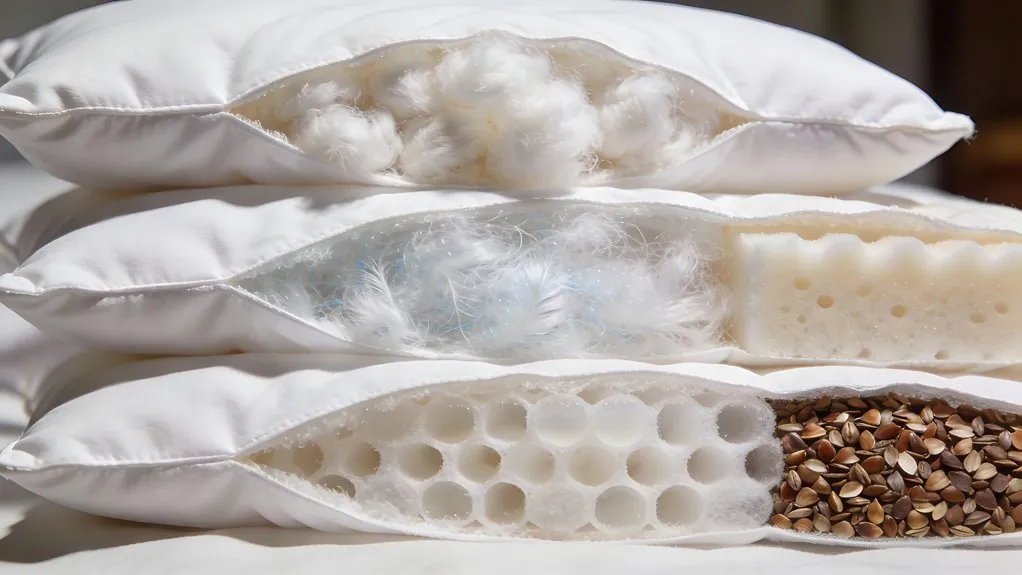
Pillow Fill Materials Explained: Which Lasts Longest?
You’ll replace your pillow three to five times more often depending on what’s inside it. That’s not marketing talk, it’s the reality of fill materials breaking down at drastically different rates.
A latex pillow might support your head for fifteen years while a polyester one goes flat in eighteen months. The difference comes down to how each material responds to nightly compression, moisture, and body heat.
Here’s what actually determines how long your pillow stays useful.
What Determines Pillow Fill Lifespan: Material Density and Sleep Habits?
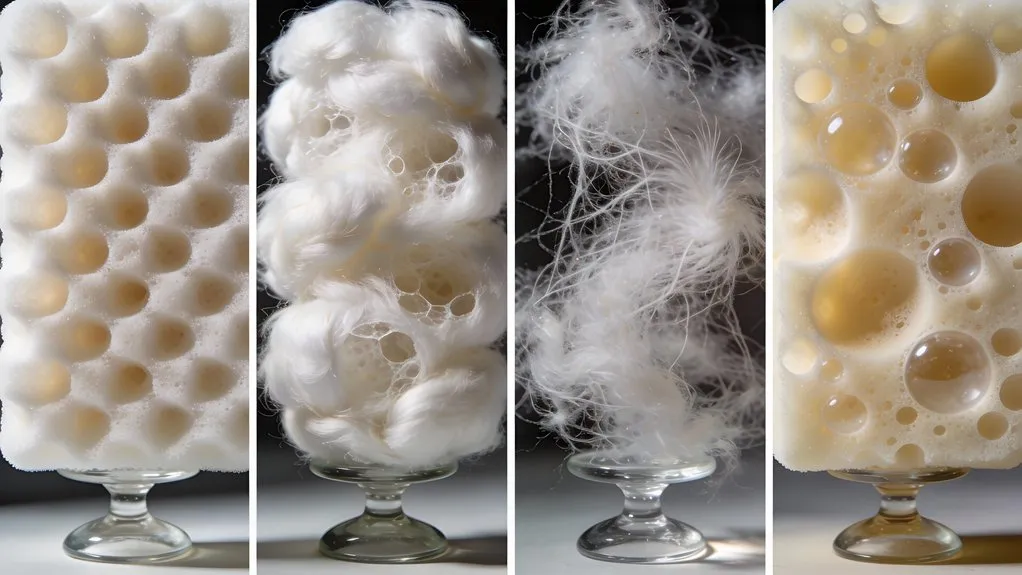
When you’re shopping for a new pillow, you’ll quickly notice that prices and quality vary wildly, and there’s a reason for that.
Material density plays a huge role in longevity. Denser fills like natural latex and memory foam withstand years of use, while lighter polyester fiberfill clumps and flattens within 1-2 years.
Denser pillow materials like latex and memory foam outlast polyester fiberfill by years, making material choice critical for longevity.
Your usage patterns matter too. If you toss and turn frequently, you’ll create uneven pressure that degrades support faster.
Material maintenance extends lifespan considerably: regular fluffing and proper washing help any fill keep its shape.
Down pillows with good care can last 10-15 years, proving density and habits determine durability. Wool pillows are also highly durable and resistant to odors and stains, making them low maintenance compared to other pillow types.
Pillow Fill Durability Ranked: Longest to Shortest Lasting
If you’re investing in a new pillow, you’ll want to know exactly what you’re getting for your money regarding longevity.
Understanding pillow fill comparisons helps you choose wisely.
Durability factors vary greatly across materials:
- Down and buckwheat hull pillows lead the pack at 10-15 years with proper maintenance.
- Natural latex pillows maintain their supportive structure for 8-10 years.
- Memory foam pillows provide decent value, lasting 3-5 years before losing shape.
- Polyester fiberfill pillows offer the shortest lifespan at just 1-3 years before clumping.
Bamboo pillows typically contain memory foam as their primary filling material, which influences their overall durability compared to other pillow types.
Your choice directly impacts replacement frequency and long-term costs.
Down and Feather Fills Last 5–10 Years With Basic Care

Unlike synthetic fills that break down within a few years, down and feather pillows reward you with 5-10 years of consistent comfort when you treat them right.
High-quality Hungarian goose down can push that timeline to 10-15 years thanks to superior loft retention.
Down pillow maintenance requires regular fluffing to redistribute fill and occasional washing with gentle detergent.
Feather pillow care follows similar guidelines, though you’ll likely need replacement sooner since feathers compress faster than down clusters.
Regular fluffing is essential to prevent compression in specific areas that can accelerate the breakdown of your pillow’s support structure.
The higher upfront cost pays off over time: you’re investing in nearly a decade of quality sleep instead of replacing cheap pillows every two years.
Latex and Memory Foam Fills: 2–5 Year Lifespan Compared
Foam-based pillows follow a different durability curve than their natural counterparts. Memory foam typically lasts 2 to 5 years before losing its supportive properties and flattening out.
Latex durability surpasses this considerably, with most pillows maintaining their shape for 5 to 10 years.
Here’s what affects their lifespans:
Several factors determine foam pillow longevity, from material composition and density to your sleep habits and how well you care for them.
- Memory foam gradually breaks down, creating permanent body impressions that won’t bounce back.
- Latex naturally resists compression and springs back to its original form night after night.
- Higher-quality materials in either type extend usability regardless of foam variety.
- Your nightly use and maintenance habits directly impact how long each pillow remains supportive.
Latex costs more initially but often proves more economical over time. In contrast, down pillows can last significantly longer when properly maintained, making them a durable alternative for those seeking longevity in their bedding investments.
Buckwheat Hull Pillow Fill: 3–5 Years of Adjustable Support
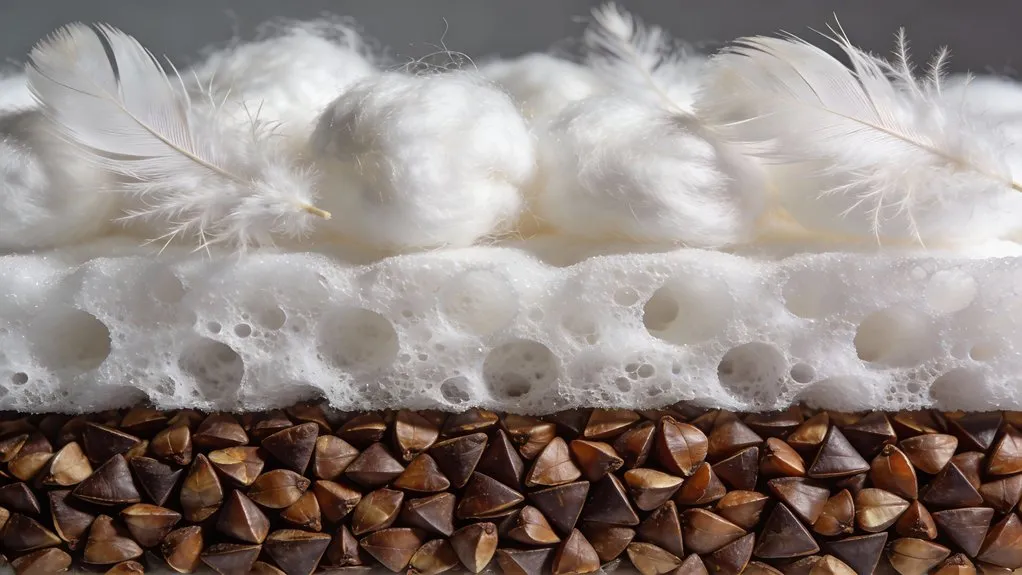
Buckwheat hull pillows take a completely different approach to sleep support.
You’ll find the buckwheat benefits immediately noticeable: these natural fills provide firm support that’s particularly effective for back and side sleepers.
The adjustable loft feature lets you add or remove hulls until you’ve achieved your ideal height and firmness level.
Excellent airflow keeps you cool throughout the night, and you’re looking at a solid 3 to 5 years of use.
They’re eco-friendly and durable, though you’ll notice some rustling noise when you move.
Unlike polyester pillows that are prone to clumping, buckwheat hulls maintain their structure and support over time.
The customization options make them worth considering despite their unique characteristics.
Wool and Cotton Fills Last 2–4 Years Despite Natural Benefits
Wool and Cotton Fills Last 2,4 Years Despite Natural Benefits
Natural fiber pillows offer two standout options that balance comfort with environmental responsibility. Wool and cotton fills deliver hypoallergenic qualities and biodegradability, yet they’ll need replacement every 2,4 years.
In any fill comparison, these materials trade longevity for sustainability.
Your pillow care routine matters here:
- Fluff weekly to redistribute fibers and prevent permanent flat spots
- Wash according to labels using gentle cycles and thorough drying
- Watch for clumping in wool or excessive compression in cotton
- Replace when support fades, typically around the three-year mark
Cotton compresses faster than wool, but both eventually lose their shape despite proper maintenance.
Polyester Fiberfill Needs Replacement Every 1–2 Years
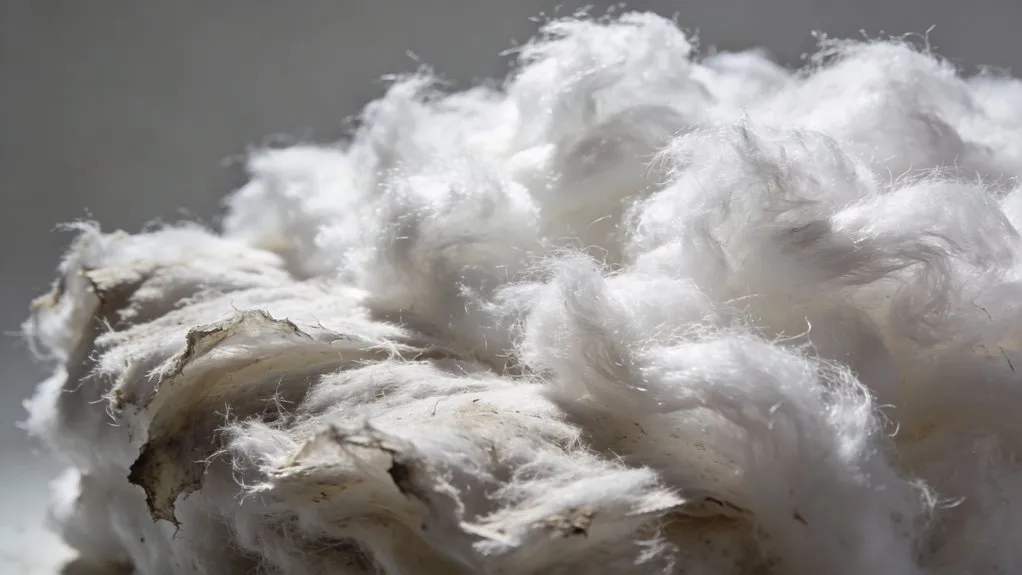
Polyester fiberfill sits at the budget end of pillow materials, and your wallet will appreciate the low upfront cost, but you’ll pay through frequent replacements.
These lightweight pillows clump and flatten within 1–2 years, losing their supportive qualities much faster than alternative materials like natural latex or down.
The synthetic fibers trap heat due to poor breathability, making summer nights uncomfortable.
You’ll need constant fluffing, and washing only delays the inevitable: moisture exposure causes odors and accelerates breakdown.
Basic pillow maintenance tips can extend their lifespan slightly, but you’re better off considering more durable options if longevity matters to you.
Microbead Fills Fail Within 12–18 Months: Why?
Why do microbead pillows collapse so quickly? Those tiny polystyrene beads simply can’t maintain their shape under nightly pressure.
Microbead degradation happens fast: you’ll notice problems within 12 to 18 months.
Here’s what goes wrong:
- Beads clump together, creating lumpy, uncomfortable spots
- Loss of loft as beads compress permanently
- Off gassing effects release chemical odors
- Environmental concerns from non-recyclable polystyrene
Unlike resilient materials that bounce back, microbeads lack the structural integrity for long-term use.
You’ll find yourself replacing these pillows far more frequently than other options, making them neither cost-effective nor eco-friendly.
Best Value Pillow Fills Based on Years of Use
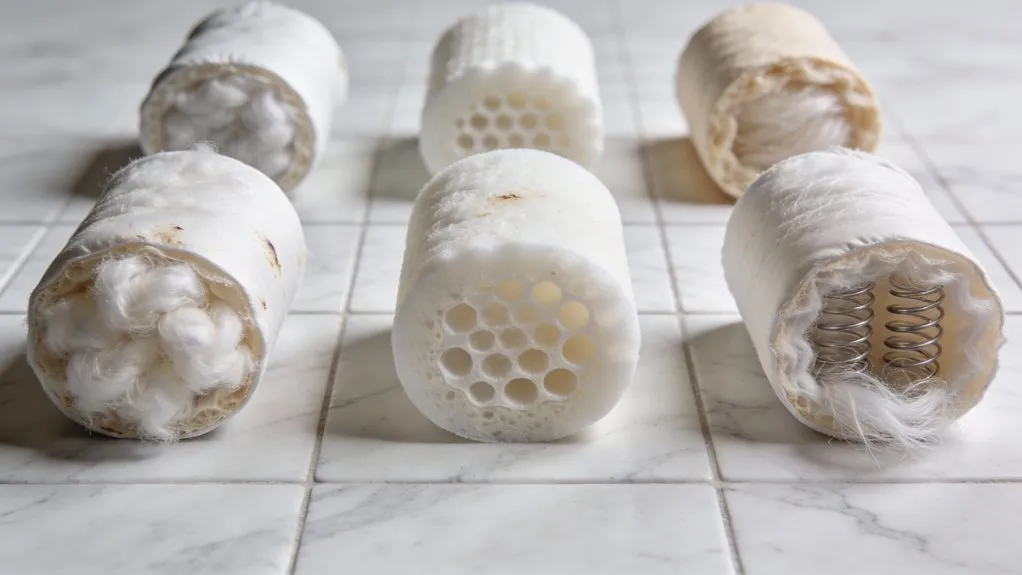
Your wallet will thank you for thinking beyond the price tag.
When comparing value, down and natural latex pillows win decisively, both last 10-15 years despite higher upfront costs. A $100 latex pillow costs roughly $6.67 per year, while a $20 polyester pillow at 2-year longevity runs $10 annually.
That’s a clear value comparison favoring quality materials. Buckwheat hulls offer similar fill longevity, maintaining their shape for years.
Memory foam sits middle-ground at 3-5 years, but polyester fiberfill demands replacement every 1-3 years due to clumping.
Smart buyers calculate cost-per-year, not just initial price.
Extend Pillow Lifespan: Washing Frequency and Protective Covers
Buying the right pillow matters, but maintaining it properly determines whether you’ll actually get those 10-15 years from your investment.
Smart pillow hygiene tips start with washing every 3-6 months to eliminate dust mites, allergens, and odors that break down fill materials.
Regular pillow washing every 3-6 months removes harmful dust mites and allergens while preventing odors that degrade fill quality over time.
Proper washing techniques protect your investment:
- Check manufacturer instructions before washing, memory foam and down need special care
- Use pillow protectors to shield against sweat, spills, and dust accumulation
- Air dry completely to prevent clumping and maintain original shape
- Fluff and rotate regularly to distribute fill evenly and reduce wear patterns
These simple practices greatly extend any pillow’s functional lifespan.